Rimless, Half-Rim or Full-Rim Glasses: Which Should You Buy?
By Dr. Qaria,
Every pair of glasses holds its lenses in one of three ways. A full-rim frame runs a ring of metal or plastic around the whole lens. A half-rim frame has a rim along the top only, with the lower edge of the lens left open. A rimless frame has no rim at all: the bridge and the temples fasten straight to the lenses. The choice changes how the glasses look, which lenses you can use, how they wear over the years and what you pay. This guide sets out the differences in plain terms so you can decide before you order.
The advice holds wherever you buy. Where we use OpteLux frames as examples, we say so, and the figures are at the time of writing.
What the three terms mean
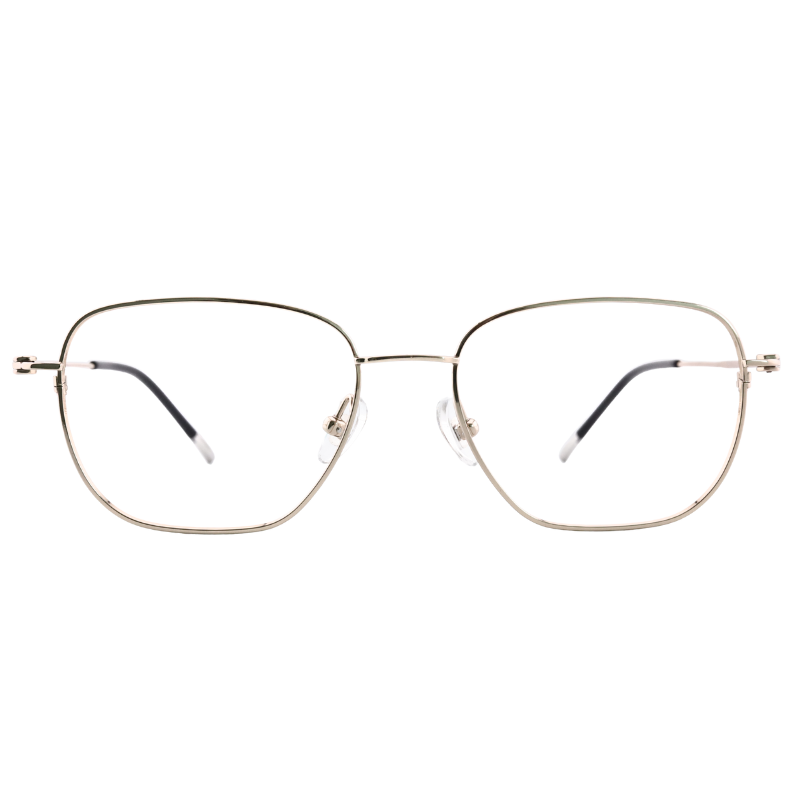
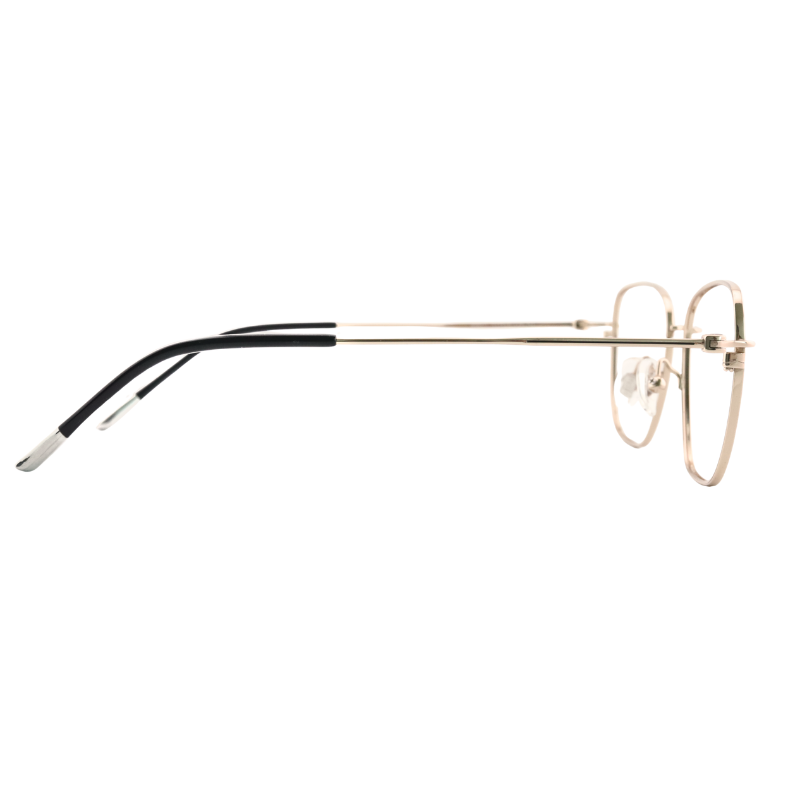
- Full rim. The lens sits inside a closed rim. The rim is what you see, and it hides the edge of the lens. Most frames are made this way; in the OpteLux catalogue, most are full rim.
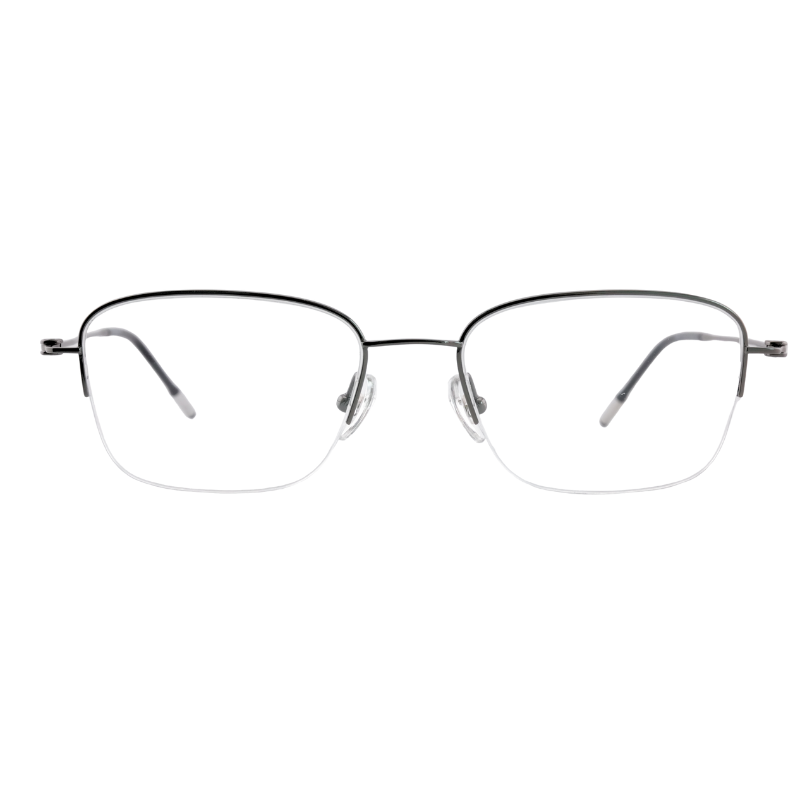
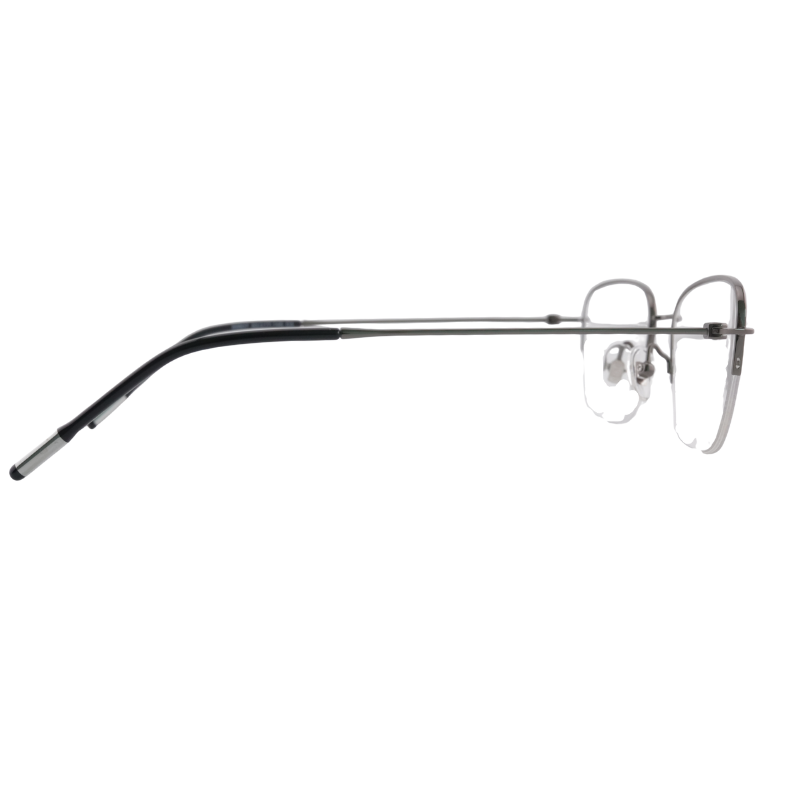
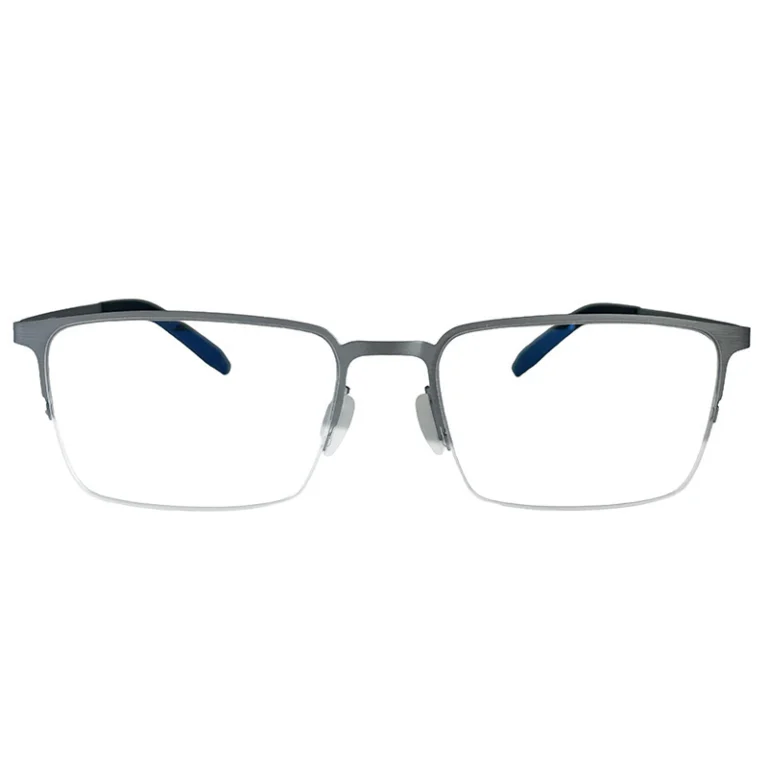
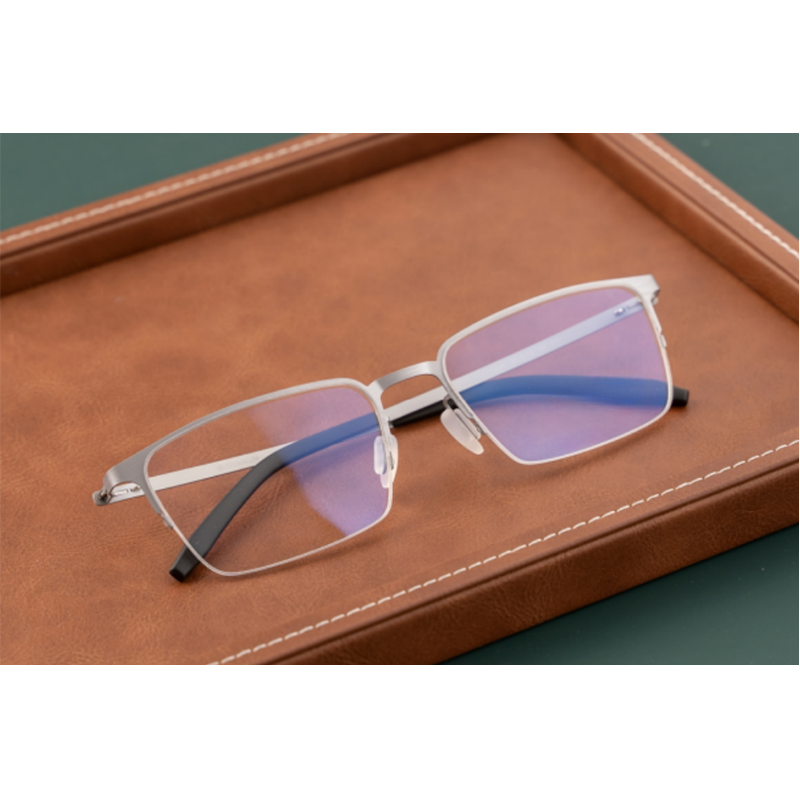
- Half rim (also called semi-rimless). A rim follows the top edge of each lens. The lower edge is usually held by a thin, almost invisible cord set in a groove cut around the lens. From a short distance the lower half of the lens seems to have no frame.
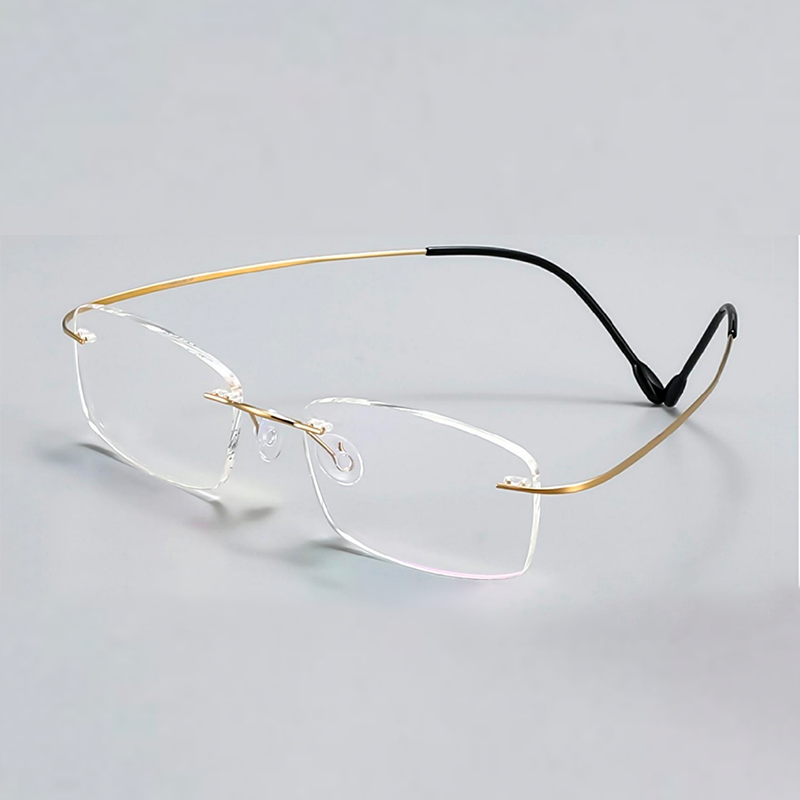
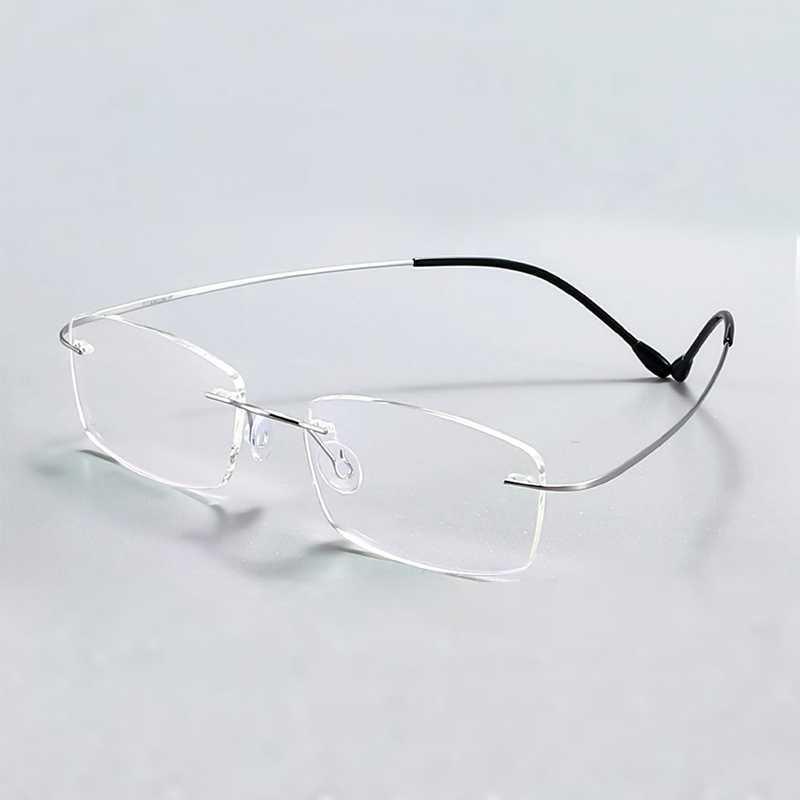
- Rimless. There is no rim. The lens is drilled, and the bridge and the temple mounts are fixed through the holes with small screws or plugs. Only the bridge and the temples are visible on the face.
Product pages normally state the type. In the OpteLux shop you can filter by rim type: full rim, half rim or rimless.
How each one looks on the face
A full rim draws a line around the eyes. Its shape, thickness and colour decide how strong that line is. A thin titanium rim in gun or silver is quiet; a thick black rim is a statement. If you want the glasses to be part of how you look, a full rim gives you the most to work with.
A half rim puts the line where the eyebrow is and leaves the lower half of the face open. It reads as businesslike without the weight of a full outline, which makes it a common choice for office wear.
A rimless frame all but disappears. People see your eyes and your face, and only later the glasses. The trade is that it does nothing to balance a face shape, because there is almost no frame to do the balancing. Our guide to choosing eyeglasses for your face shape explains where a strong or a soft frame line helps, and the frame colour guide covers finishes.
Weight: the assumption that is often wrong
Many buyers assume rimless is the lightest option because there is less frame. In practice, three things decide what sits on your nose: the frame material, the amount of frame, and the lenses.
With a light material, the amount of frame matters less than you would expect. The lightest OpteLux frame weighed so far on a scale is a full-rim frame, the ONC8803, at 7.83 g frame only. Every labelled OpteLux frame weighed so far is under 15 g. The figures and the method are in how much titanium glasses weigh.
The lenses add their own weight, which depends on your prescription, the lens index and the lens size. So if weight is your concern, look first at the frame material and the stated frame weight, then at the lens index, and only then at the rim style.
Lenses: the part that depends on the style
The rim style sets conditions for the lenses, so check them before you order.
Full rim
A full rim accepts the widest range of lenses. The rim hides the lens edge, so a thicker edge from a stronger prescription or a lower index is not on show. If your prescription is strong and you would rather not pay for the thinnest lenses, a full rim is the forgiving choice.
Half rim
The lower edge of the lens carries a groove for the cord, so the lens needs enough edge thickness to take that groove and hold it. The lower edge is also visible, which is why thin lenses look better here. Our lens index guide suggests going up one index band for half-rim and rimless frames compared with the same prescription in a full rim.
Rimless
The lenses are drilled, and the mounting points take the load every time you put the glasses on. That means two questions before you order. First, which lens material will be used, because not every material is suited to drilling, and the lens index guide covers this in its questions section. Second, what the lens edge will look like, since the whole edge is visible: a stronger prescription shows as a thicker, brighter edge, and a tint or a mirror finish shows on the edge too.
At OpteLux, prescription lenses are priced by thickness band at the time of writing: index 1.50 to 1.52 adds $110, 1.53 to 1.60 adds $230, 1.61 to 1.67 adds $360 and 1.70 to 1.74 adds $810. Index 1.75 and above is on request. The bands and coating options are listed on the OpteLux facts page. For a mild prescription in a rimless frame, one band up is often enough; for a strong one, compare the price of the band you would need against the same lenses in a full rim before you decide on the style.
Not sure what your prescription says? See how to read your eyeglass prescription.
Durability and care
A full rim protects the lens edge from knocks and keeps the lens held evenly all the way round.
A half rim is close behind. The cord that holds the lower edge can stretch or wear over the years and may need to be replaced, which is routine work for an optician.
A rimless frame asks for a little more discipline. Take the glasses off with both hands so the mounts are not twisted one side at a time. Push them up by the bridge, not by a lens. Keep the small screws tight; an optician can check them when you have the frame adjusted. Titanium is flexible, but the lens around a drilled hole is not, so the frame is only as robust as the way you handle it. The general rules are in how to clean and care for your glasses, and the material comparison in titanium vs acetate vs stainless steel.
Price
Rim style does not set the price on its own. Material, finish and where the frame is made matter more. In the OpteLux catalogue at the time of writing, titanium rimless frames such as the ONC1621 are $56, half-rim frames such as the ONC8807 are $66 and the OSZCN056 is $288, and full-rim frames such as the ONC6983 are $56 and the OLT203 is $160. Half-rim and full-rim frames span a wide price range. Lenses and coatings are added on top, and because thinner lenses cost more, a rimless or half-rim frame can end up costing more in total than a full rim with the same prescription.
Fit: check the PD range before you fall for a style
Each frame fits a range of pupil distances (PD). Rim style and PD range are not linked in principle, but in a real catalogue they often are. The OpteLux rimless frames at the time of writing fit PDs from 66 mm upwards, for example the ONC1621 at 66 to 74 mm and the ONC1631 at 70 to 78 mm. Someone with a narrower PD will find more choice among half-rim frames such as the OSZCN056 at 58 to 66 mm or the OKA8202 at 64 to 72 mm.
So measure first. How to measure your PD at home explains the ruler method, and the free face and PD measurement in the VisionCraft Center gives an estimate from your camera, in your own browser, with nothing uploaded. Both are estimates. The PD on your optician's prescription stays the reference. Once you have a figure, the AI frame suggestion lists frames that fit it and suit your face shape.
Which style for which person
- Strong prescription, and you would rather not pay for the thinnest lenses: full rim. The rim hides the edge.
- You want the glasses to be noticed, or to balance your face shape: full rim, in a shape and colour chosen for the job.
- Office look with a lighter feel: half rim. A clear brow line, open below.
- You want to see your face, not your glasses: rimless, with a mild to moderate prescription and a lens material suited to drilling.
- Glasses you put on and take off many times a day, such as reading glasses: full rim or half rim. Rimless mounts prefer to be handled with care.
- Tinted or mirror lenses: full rim, so the lens edge is hidden.
Four OpteLux examples across the three styles
All four are titanium and all are offered with prescription, reading or no-prescription lenses, or as frame only. Prices are frame only, at the time of writing.
| Frame | Rim | Bridge | Temples | PD range | Frame price |
|---|---|---|---|---|---|
| ONC1621, rectangular | Rimless | 18 mm | 142 mm | 66 to 74 mm | $56 |
| ONC8807, square | Half rim | 17 mm | 145 mm | 66 to 74 mm | $66 |
| OSZ968, rectangular | Half rim | 18 mm | 145 mm | 69 to 77 mm | $118 |
| ONC8803, square | Full rim | 17 mm | 145 mm | 66 to 74 mm | $66 |
The ONC8803 is the one with a measured weight, 7.83 g frame only. The others have not been weighed, so we do not state a weight for them.
Not every rimless frame in the catalogue is titanium. The product page states the material for each model, so read it rather than assume.
Before you order
- Decide on the look you want, using the face shape guide if a frame line matters to you.
- Check your prescription strength. Strong prescriptions favour a full rim or a higher index band.
- Measure your PD and compare it with the frame's PD range. Estimates from the tools, the optician's figure as the reference.
- For rimless or half rim, ask which lens material will be used and what index band you need.
- Add up frame, lenses and coating before comparing styles, not the frame price alone.
If you want to see the total as you go, Design your pair lets you start from your PD, pick a frame that fits, then choose lenses and coating with the price shown at each step. OpteLux gives 30-day returns on frames; lenses are made to order, so read the return policy for lenses before you buy.
Questions and answers
Are rimless glasses lighter than full-rim glasses?
Not necessarily. The frame material and the lenses decide most of the weight. The lightest OpteLux frame weighed so far is a full-rim frame, the ONC8803 at 7.83 g frame only, and every labelled OpteLux frame weighed so far is under 15 g.
Can I get rimless glasses with a strong prescription?
You can, but the lens edge is on show and the lenses are drilled, so you usually need a higher index band and a lens material suited to drilling. Compare the total price with the same lenses in a full rim before you choose.
What holds the lens in a half-rim frame?
A rim along the top edge and, usually, a thin cord set in a groove around the lower edge of the lens. The cord can wear over the years, and an optician can replace it.
Which rim style fits a narrow PD?
At the time of writing, OpteLux rimless frames fit PDs from 66 mm upwards, so a narrower PD has more choice among half-rim frames such as the OSZCN056 at 58 to 66 mm. Measure your PD first; your optician's figure is the reference.
General guidance, not a replacement for an eye examination by a qualified specialist. About the author.