Lens Index Explained: 1.50 to 1.74, Which Do You Need?
By Dr. Qaria, · اقرأ بالعربية
Lens index describes how strongly a lens material bends light. A higher index means the same prescription can be ground thinner. Most buyers need it only once their prescription passes roughly -2.00, and going higher than necessary costs money, adds glare and rules out some frames. Choose the index from your combined prescription power, not from the price list.
Key takeaways
- Index changes thickness and weight. It does not change how sharply you see.
- Add your SPH and CYL together and choose for that figure, not for the sphere alone.
- High-index is defined as a refractive index of 1.60 or higher.
- Thinner is not automatically better: higher index generally means more colour fringing and less impact resistance.
- Rimless and half-rim frames push you up a band. Smaller lenses pull you back down.
- If you need an impact-resistant lens, ask for the material by name rather than picking by index.
What is lens index, and what does it actually change?
Refractive index is a measure of how much a material slows and bends light passing through it. In spectacles it has one practical consequence: the higher the index, the less material is needed to achieve the same optical power. A -6.00 lens in a low-index material is a thick disc with a heavy rim. The same -6.00 in a high-index material is noticeably slimmer and flatter at the edge.
That is the whole benefit, and it is a cosmetic and comfort benefit rather than a visual one. A correctly made lens gives you the correction written on your prescription whichever index it is cut from. If you are still working out what those numbers mean, start with our guide to how to read your eyeglass prescription and come back, the index decision follows directly from the SPH and CYL figures on that sheet.
Index only becomes a real decision at moderate to strong prescriptions. Below about -2.00 the thickness difference between bands is small enough that most people would not notice it, and paying for a thinner lens buys very little.
Which lens index do you need for your prescription?
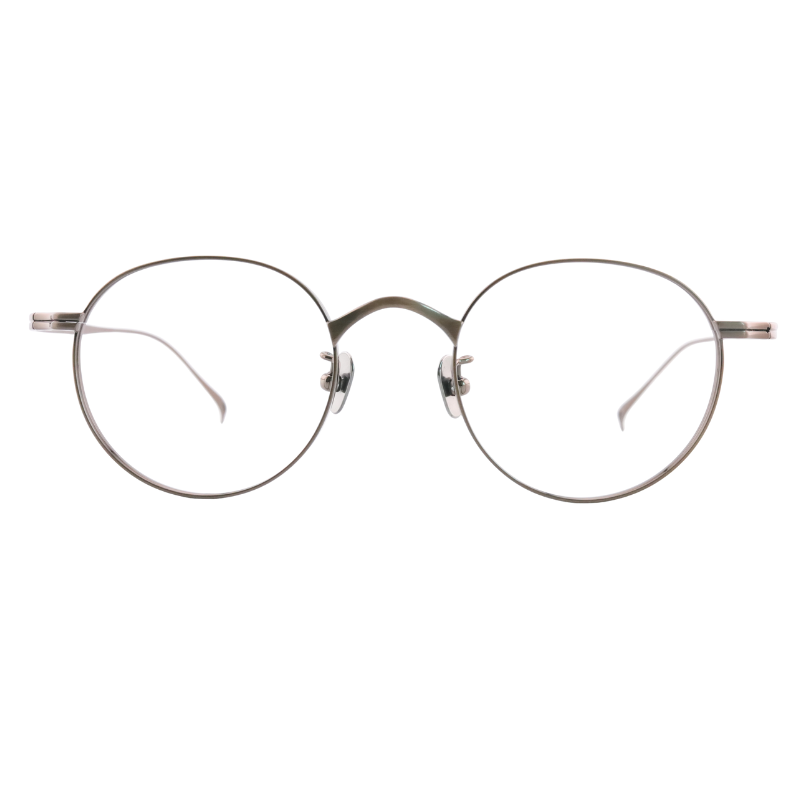
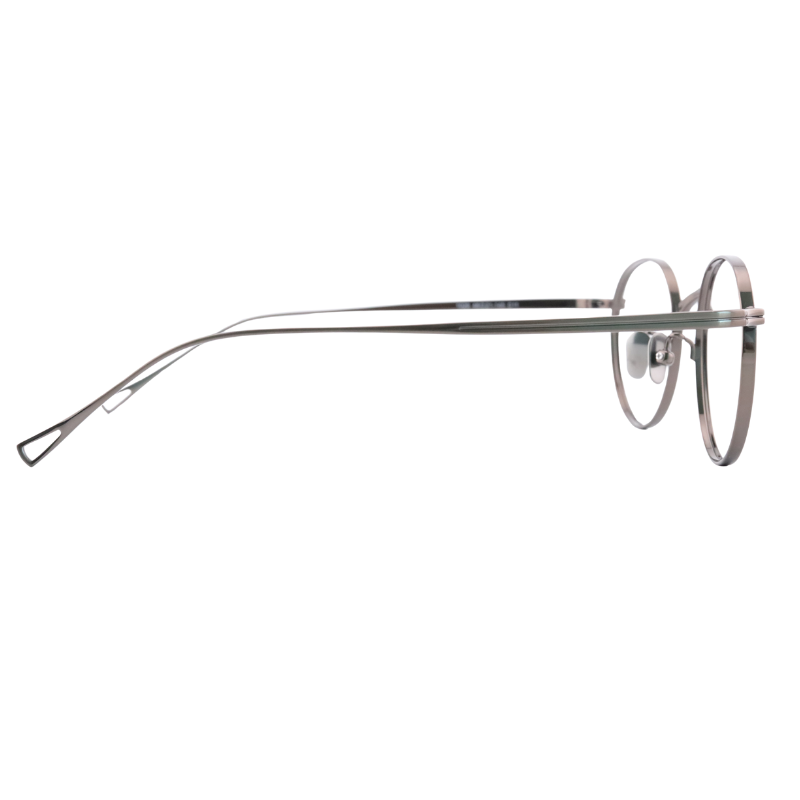
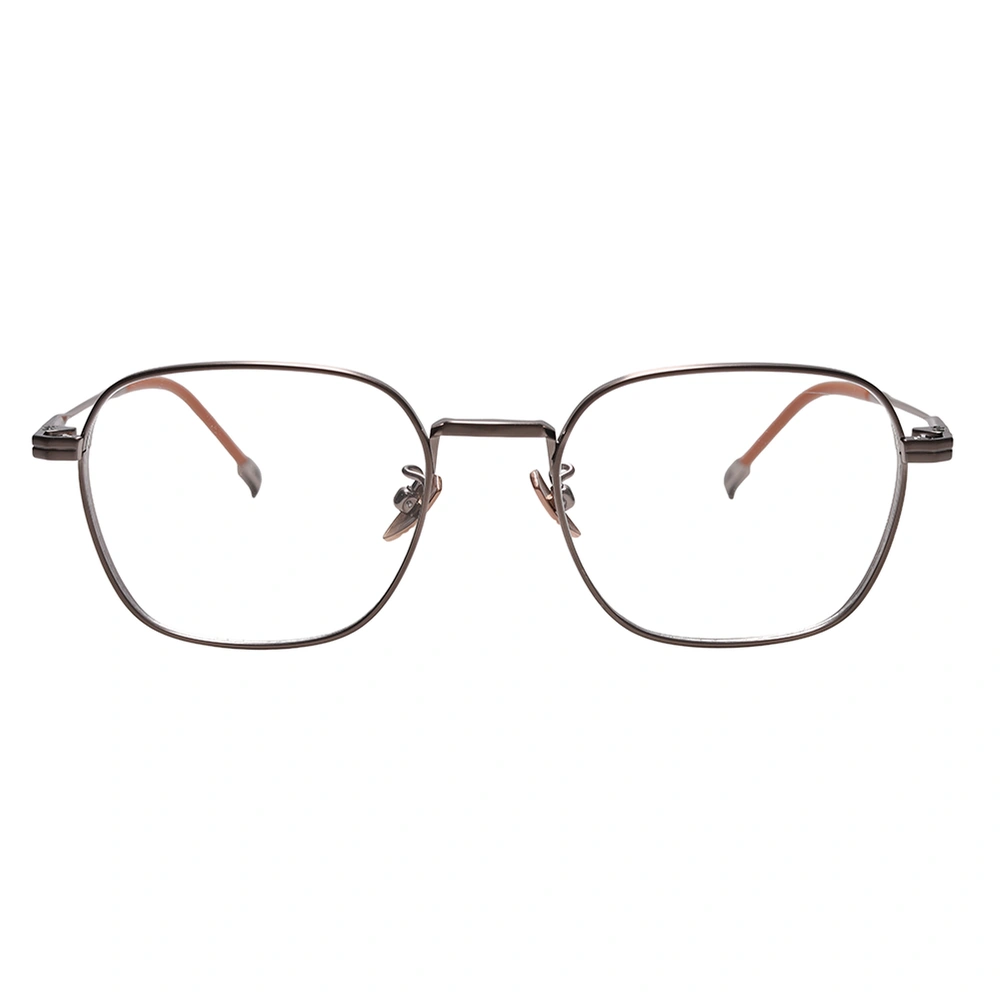
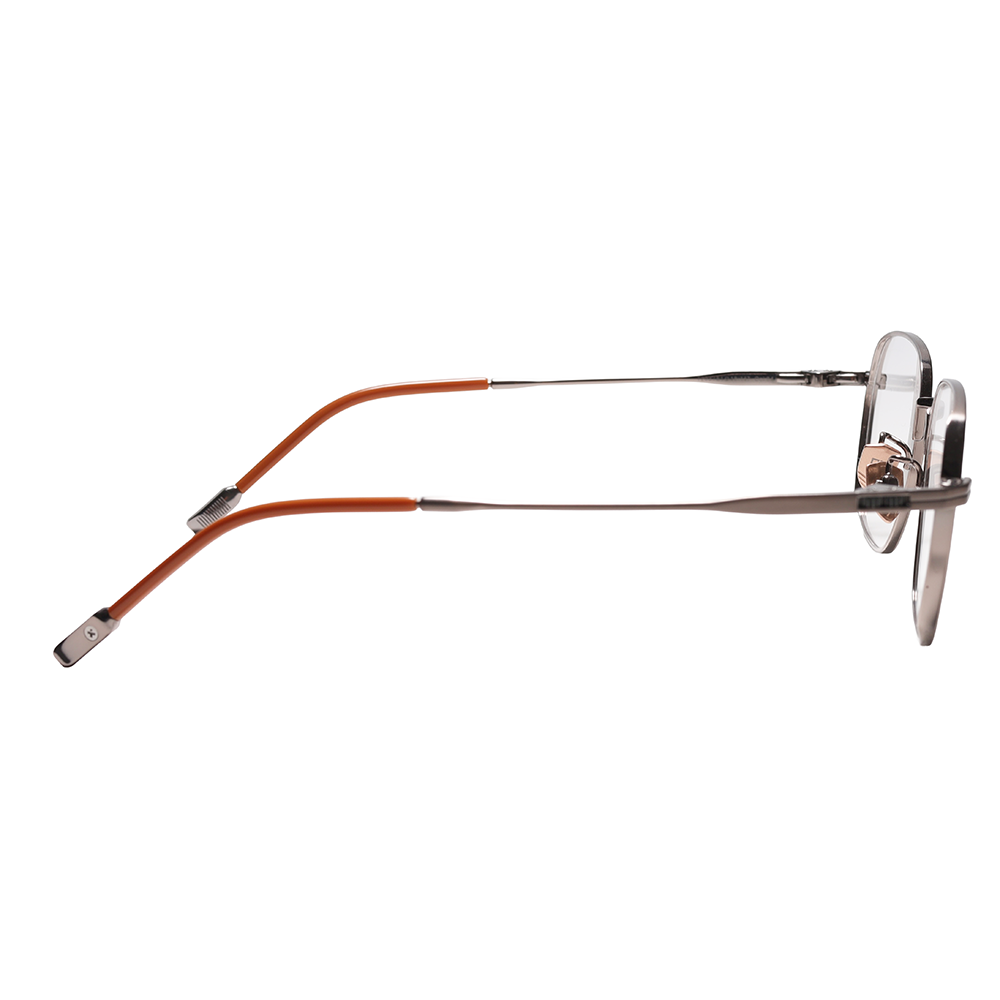
OpteLux product pages list five refractive index bands rather than material names. Checked on 13 September 2026, an ONC129 titanium round frame offers exactly these options, and the same five appear across the catalogue.
The table below is a practical starting point, not a clinical standard. Work from your combined power: add the SPH and CYL figures together, ignoring the signs if both are minus. A -2.00 SPH with a -1.75 CYL behaves along its thickest meridian like a -3.75 lens, so it should be specified as one.
| Index band | Typical combined power | What you notice | Worth paying for when |
|---|---|---|---|
| 1.50 to 1.52 | Up to about 2.00 | Standard thickness. Perfectly unremarkable in a full-rim frame | Almost always, at this strength |
| 1.53 to 1.60 | About 2.00 to 4.00 | Visibly slimmer edge; the first band most people actually need | Full-rim frames, moderate prescriptions |
| 1.61 to 1.67 | About 4.00 to 6.00 | Clearly thinner and lighter; edges stop bulging past the rim | Stronger prescriptions, half-rim frames, larger lenses |
| 1.70 to 1.74 | About 6.00 to 8.00 | Thinnest practical option; flatter front curve | Strong prescriptions where edge thickness is the main complaint |
| 1.75+ (ultra high) | Above about 8.00 | Marginal gain over 1.74 for most powers | Very strong prescriptions only |
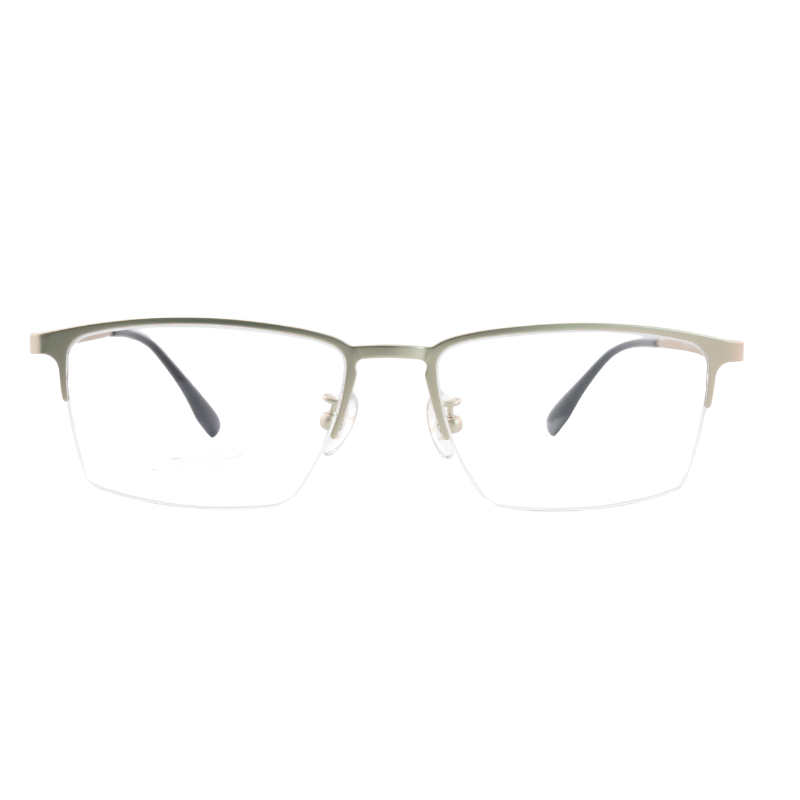
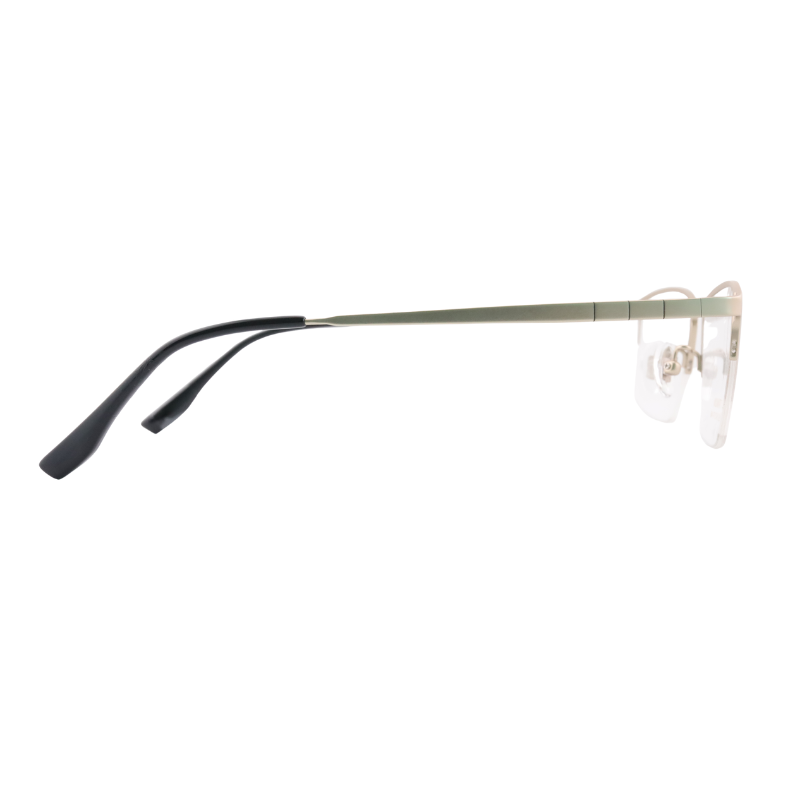
Two things move you up a band regardless of power: a rimless or half-rim frame, because the lens edge is on show rather than hidden, and a large lens, because edge thickness grows with the distance from the optical centre to the rim. Two things move you down: a small lens opening, and a well-centred fit. Which is why your pupillary distance measurement is not a separate errand, an accurate PD puts the thinnest part of the lens in front of your pupil and pushes the thick part out to the edge where the frame can hide it.
What do you give up by going thinner?
Higher index is a trade, not an upgrade. Three things move in the wrong direction.
Colour fringing. Lens materials disperse light into its component colours to different degrees, described by the Abbe number, a high Abbe number means minimal dispersion. As index rises, Abbe number generally falls, and some wearers see faint coloured edges around high-contrast objects, most noticeably at the periphery of a strong lens. Many people never notice it. Those who do tend to notice it on car headlights at night.
Impact resistance. This is the one worth knowing. According to the American Academy of Ophthalmology’s EyeWiki, “None of the high-index materials pass the American National Standards Institute’s impact resistance standards,” where high-index is defined as an index of 1.60 or higher. For everyday office wear that is rarely decisive. For sport, for a child’s glasses, or for a rimless frame where the lens is drilled rather than held in a rim, it matters.
Cost. Each band up adds to the lens price, and beyond the index your prescription actually calls for you are paying for thickness you would not have seen anyway.
Does a higher lens index make you see better?
No. Index determines the shape the lens has to be, not the correction it delivers. A -5.00 lens at 1.50 and a -5.00 lens at 1.74 correct your vision identically. What changes is the weight on your nose, the thickness at the rim, and how much your eyes appear magnified or shrunk to other people.
It is worth saying plainly that the National Eye Institute notes “wearing glasses doesn’t make your eyes weaker or your vision worse”, a common worry that comes up alongside index questions, and one the evidence does not support.
Which lens material should you ask for, and when?
Index bands and material names are not the same thing, and a band can be met by more than one material. Where a specific property matters, impact resistance above all, ask for the material by name before ordering rather than assuming an index band delivers it. The properties below are as described by EyeWiki.
| Material | Chromatic aberration | Impact resistance | UV | Best for |
|---|---|---|---|---|
| CR-39 (standard plastic) | Low dispersion | Standard | Blocks 80% of UV untreated | Mild prescriptions in full-rim frames |
| Polycarbonate | High, low Abbe number | Superior; up to 30% thinner than regular glass or plastic | Provides UV protection | Impact risk, drilled rimless, active wear |
| Trivex | Minimal, high Abbe number | Meets high-velocity impact standards | Blocks nearly all UV | Impact resistance without the fringing |
| High-index (1.60+) | Generally higher as index rises | Does not pass ANSI impact standards | Varies; confirm with the supplier | Strong prescriptions where thickness is the problem |
OpteLux lenses are designed in Japan and France and made in Asia and France. If your prescription is strong, or your frame is rimless, it is a fair and easy question to ask which material a given index band will be supplied in for your specific power.
How does your frame choice change the index you need?
More than most buyers expect. Edge thickness in a minus lens is a function of power, lens diameter and how far the optical centre sits from the edge. Shrink the lens and you shrink the thickest point.
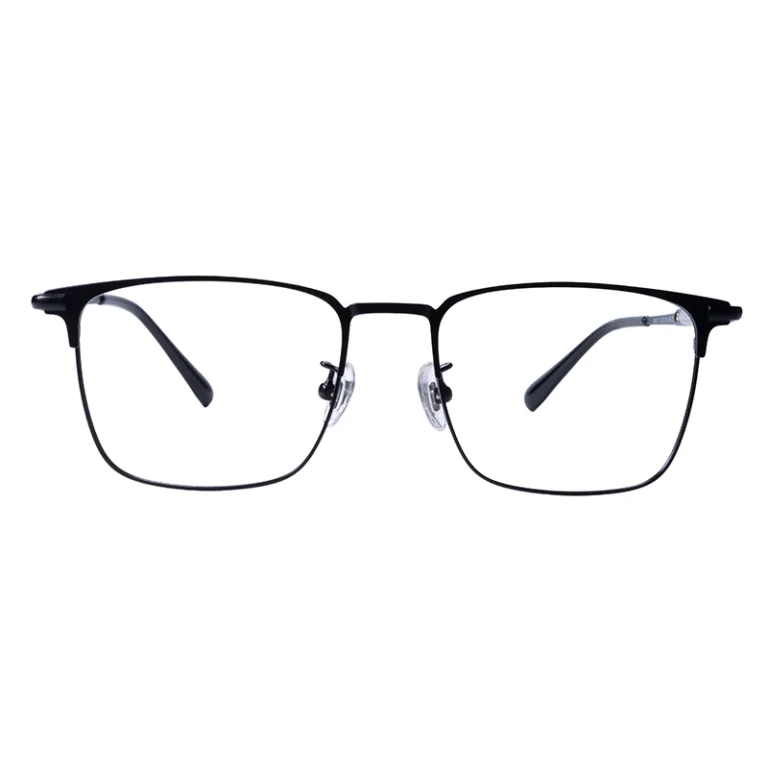
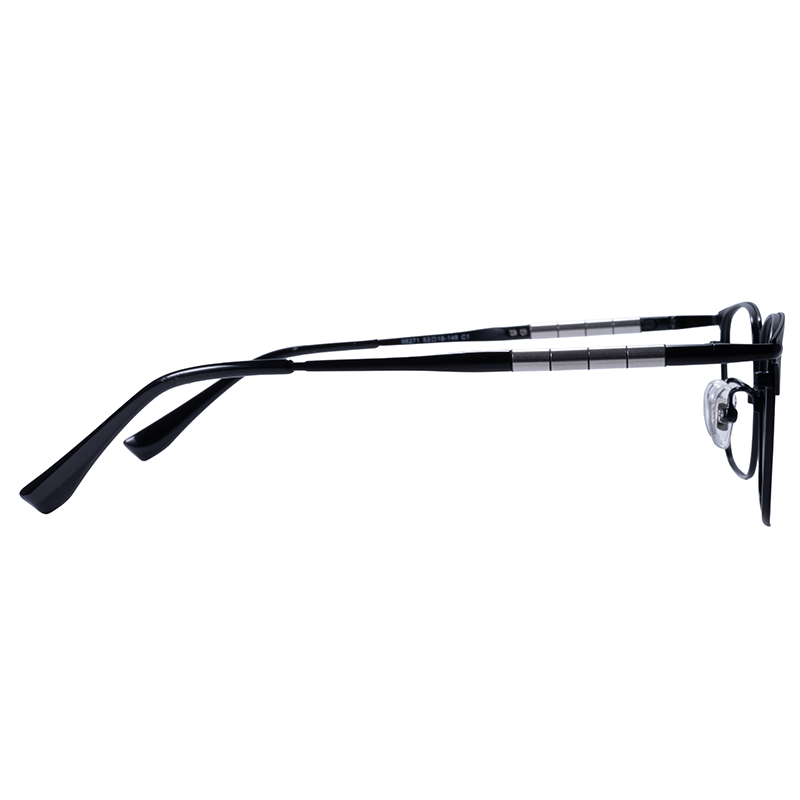
In practice this means a moderate, well-proportioned frame can save you a whole index band. A titanium square frame at 52-20-140 with a modest lens height will carry a -4.00 far more discreetly than an oversized frame with the same lenses. Thin metal rims also conceal an edge better than a fine acetate profile of the same shape, one of several practical differences covered in our comparison of titanium, acetate and stainless steel frames.
If you have astigmatism, the cylinder power adds thickness along one meridian only, so the lens is thicker at one edge than the other. That asymmetry is the reason the combined-power rule matters, and it is covered in more depth in our guide to glasses for astigmatism.
You can compare frame dimensions across the full range on the titanium eyeglasses pages, where lens width, bridge width, temple length and total frame width are published per model.
How to choose your lens index in five steps
- Read your prescription. Find the SPH and, if present, the CYL for each eye.
- Add them together, ignoring the signs if both are minus. Use the higher of your two eyes.
- Find that figure in the table above and note the band it falls in.
- Adjust for the frame. Rimless, half-rim or a large lens: go up one band. A small, well-fitted lens: stay where you are.
- Check the material if impact resistance matters to you, and confirm your PD is measured rather than estimated before you order.
You can measure your PD and face dimensions free in the VisionCraft Center, which returns face width, canthal distance, bridge width and pupil distance, four numbers that between them tell you both which frame fits and how well-centred your lenses will be.
What about coatings, are they part of the same decision?
They are a separate line on the order, and they are worth reading before you choose. OpteLux product pages list anti-fog, photochromic, polarised and blue-light-blocking options alongside the index bands, checked 13 September 2026.
Two points are worth keeping straight. An anti-reflective coating matters more as index rises, because higher-index materials reflect more light from their surfaces, so if you are paying for a thin lens, it is usually worth pairing with one. And photochromic lenses, which darken outdoors, are a different answer to a different question than sunglasses; the trade-offs are set out in our comparison of clip-on versus prescription sunglasses.
When should you see an eye-care professional?
Lens index is a dispensing decision, not a medical one, but it sits next to some things that are. Book an appointment rather than reordering online if your vision has changed noticeably since your last test, if you are getting persistent headaches or double vision, or if you notice flashes, floaters or a sudden change in one eye. Glasses correct focus; they do not treat an eye condition, and an eye test checks eye health as well as your prescription.
If your prescription is strong, complex, or involves prism, a dispensing optician measuring you in person will make a better index and frame decision than any table can, including this one.
Frequently asked questions
What lens index do I need for a -4.00 prescription?
With little or no astigmatism, the 1.61 to 1.67 band is the usual answer for a -4.00 in a full-rim frame. Add any cylinder power first: a -4.00 with a -1.00 CYL is a combined -5.00 and sits more comfortably in that band, or above it in a rimless frame.
Is 1.74 always better than 1.67?
No. The thickness difference between them is small at moderate powers, and 1.74 generally brings more colour fringing and a higher price. It earns its place at strong prescriptions where 1.67 still leaves a visible edge.
Can I put high-index lenses in a rimless frame?
Rimless frames have the lens drilled and bolted rather than held in a rim, which puts stress on the material. Since high-index materials do not pass ANSI impact standards, this is exactly the case to ask which material will be used before ordering, rather than choosing on index alone.
Does a higher index make lenses lighter as well as thinner?
Usually, because there is less material, though density varies between materials, so a thinner lens is not always proportionally lighter. At strong prescriptions the difference is easy to feel; at mild ones it is not.
Will a high-index lens stop my eyes looking small behind my glasses?
It reduces the effect but does not remove it. Minification in a minus lens comes from the prescription power itself. A thinner, flatter lens in a smaller frame with an accurate PD is the combination that helps most.
How do I know the index I paid for is what I received?
Ask for it to be stated on the order confirmation, and keep it. Reputable suppliers will confirm the index and material supplied for your specific power. OpteLux does not yet have published customer reviews to point you to, so judge the specification on the product page and the 30-day return terms instead.
Choose the index your prescription needs, not the highest one offered
Lens index is one of the few places in an eyewear order where spending more can actively make the product worse, more fringing, less impact resistance, no gain in sharpness. Work out your combined power, adjust for the frame you actually want, and buy the band that clears the edge. Then spend the difference on the frame, where you will notice it every day.
Related reading
- How to Read Your Eyeglass Prescription
- Glasses for Astigmatism: Which Lenses and Frames Should You Buy?
- How to Measure Your PD at Home
- Titanium vs Acetate vs Stainless Steel Frames
- Clip-On vs Prescription Sunglasses
- How to Buy Glasses Online
Sources
- EyeWiki, American Academy of Ophthalmology, Lens Material Properties, last updated 5 August 2026. Retrieved 13 September 2026.
- National Eye Institute, Eyeglasses for Refractive Errors, last updated 8 July 2019. Retrieved 13 September 2026.
- OpteLux product pages, lens index bands and coating options checked 13 September 2026.
General guidance, not a replacement for an eye examination by a qualified specialist. About the author.