Glasses for Work: How to Choose a Pair for a Long Day
By Dr. Qaria,
A pair of glasses for work has a different job from a pair you wear for an hour in the evening. It sits on your nose from the first meeting to the last e-mail. It has to stay put, stay clean and give you clear vision at the distance where you actually work. This guide walks through what to look at, in the order that matters most for a long working day.
The advice here holds wherever you buy. Where we use OpteLux as an example, we say so.
Start with how you spend the day
Before you look at frames, write down where your eyes spend most of the working day. Three questions are enough:
- How many hours do you look at a screen, and how many screens?
- How far away is the main screen? Measure it with a tape, from your eyes to the middle of the screen.
- How often do you move between the desk, meetings, a car or the street?
The answers decide the lens type, the coating and whether one pair is enough. The frame comes after.
Frame weight and material
A frame you wear for ten hours should be light. Weight rests on the nose pads and behind the ears. A heavy frame also tends to slide down, and you push it back up all day.
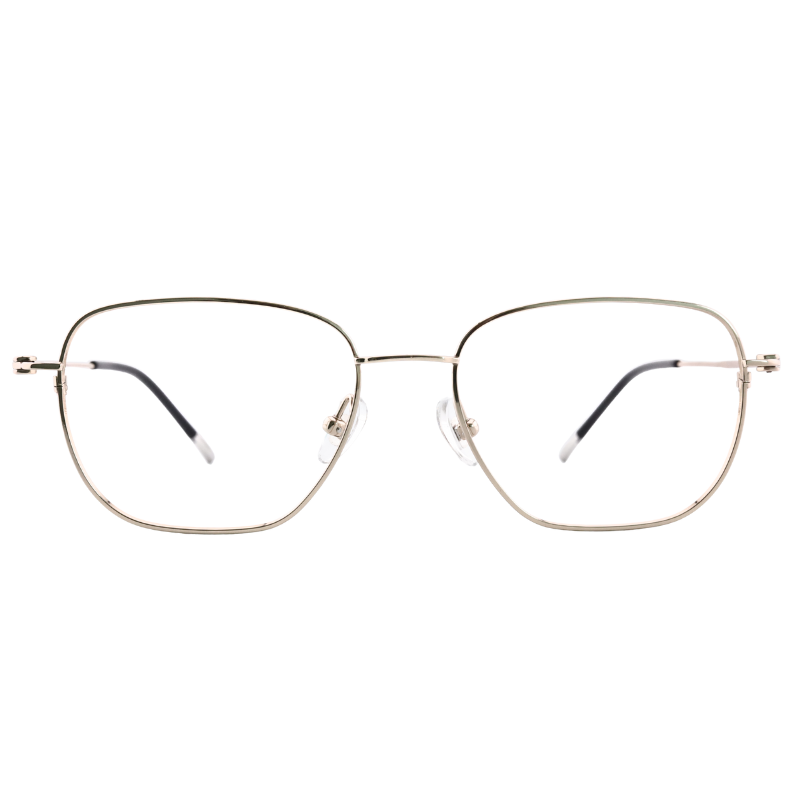
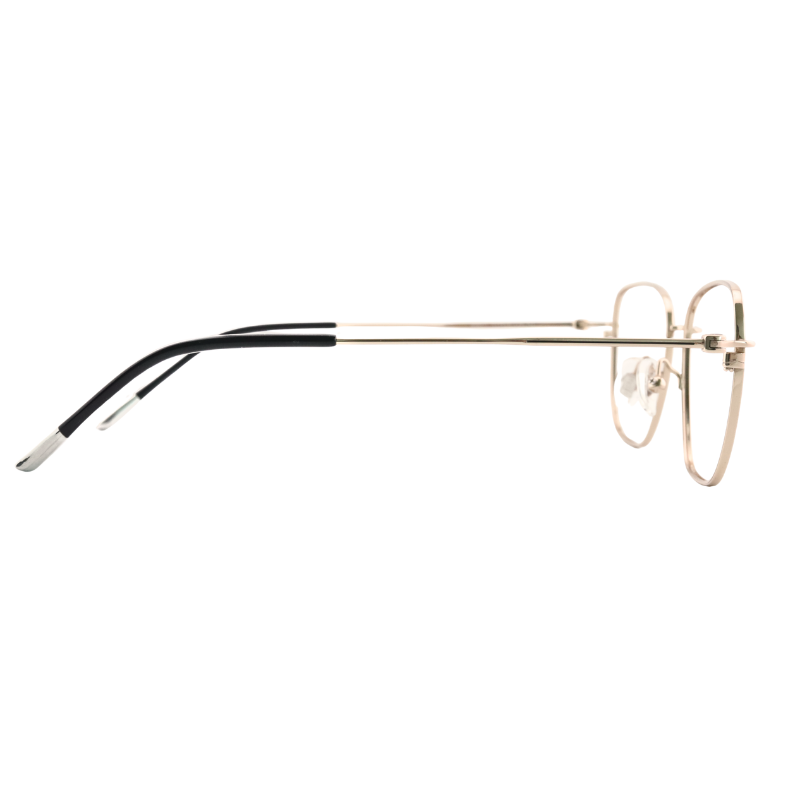
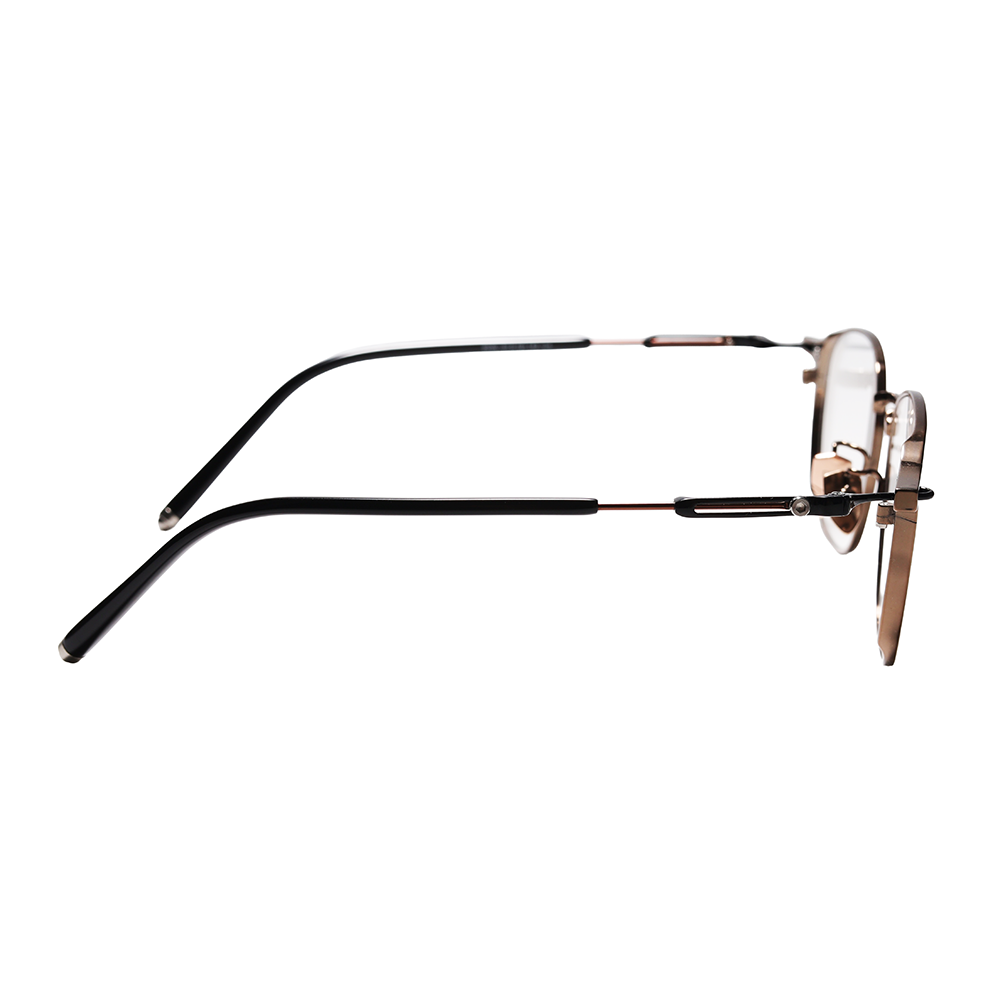
Titanium is the usual choice for light metal frames. It is light for its strength, it does not rust, it is hypoallergenic for most people and it flexes a little instead of snapping. Acetate frames can look good but are usually thicker and heavier. Stainless steel sits in between. Our comparison of titanium, acetate and stainless steel goes into the trade-offs.
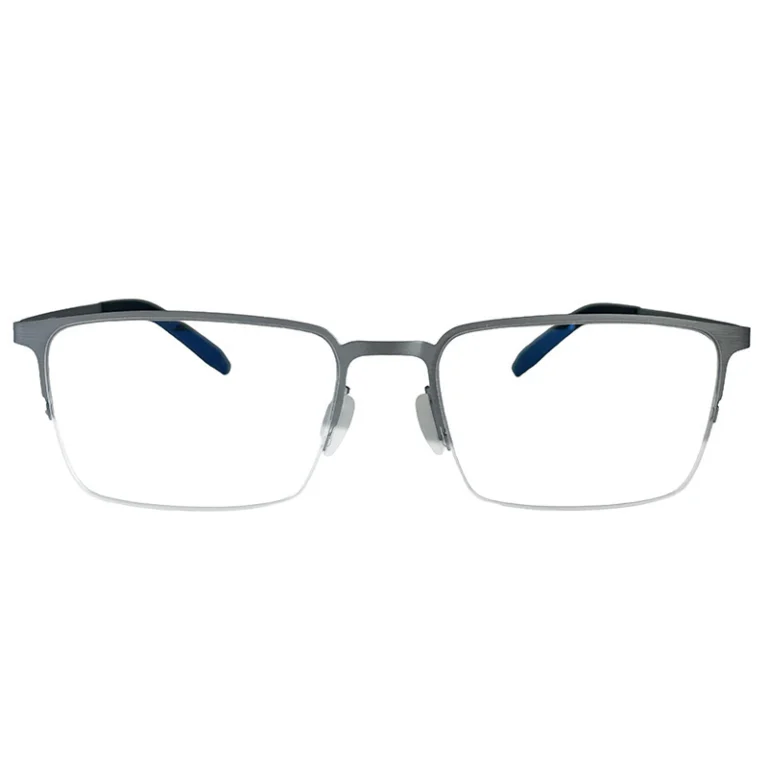
Look for a weight figure, and check what it includes. A frame weight without lenses is not the weight on your face. For a real example: we weighed the ONC8803 on a scale at 7.83 g, frame only. Every labelled OpteLux frame weighed so far is under 15 g. If a seller gives no weight at all, ask. Our article on how much titanium glasses weigh explains what adds weight once lenses go in.
Rim style
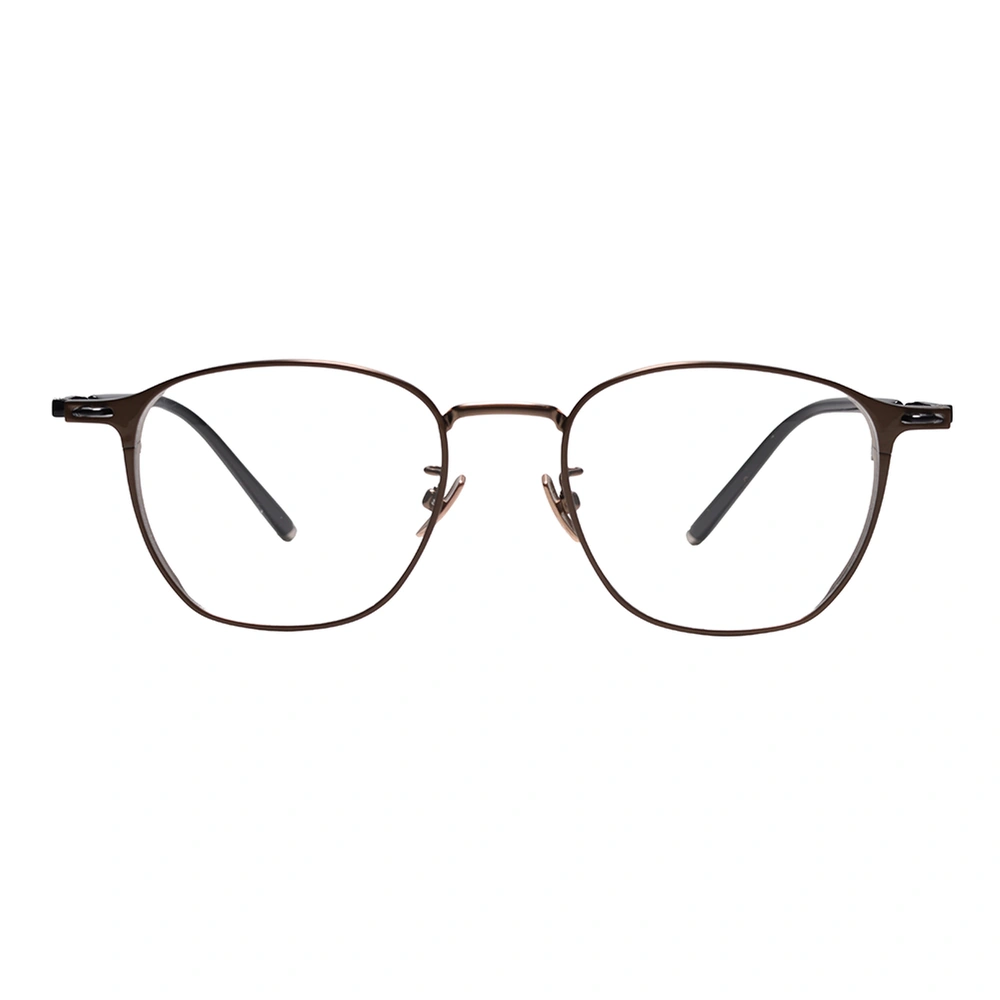
- Full rim: the lens is held all the way round. It is the most robust choice and suits stronger prescriptions, because the rim hides the lens edge.
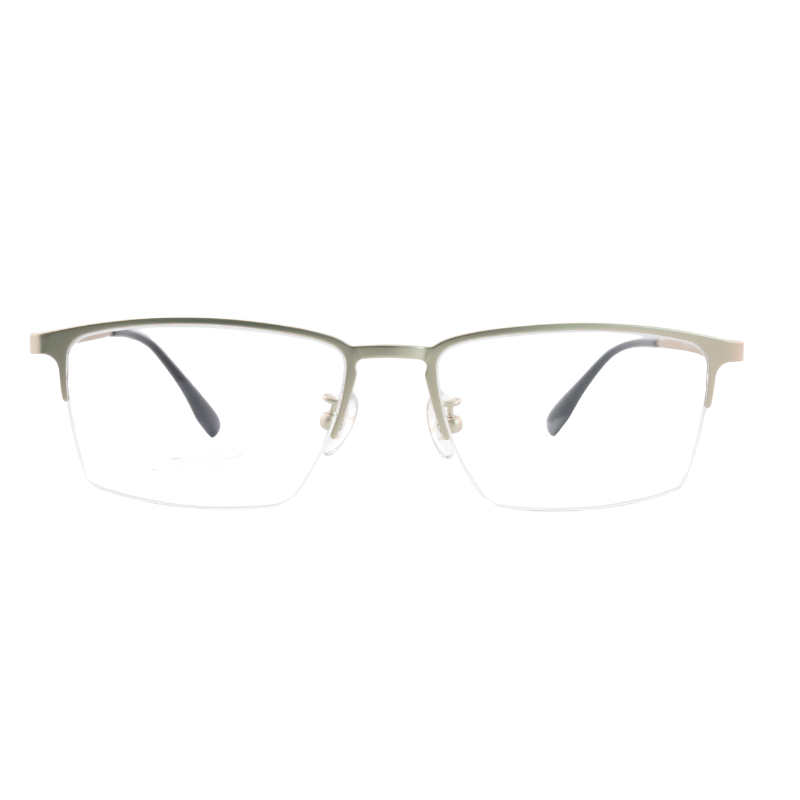
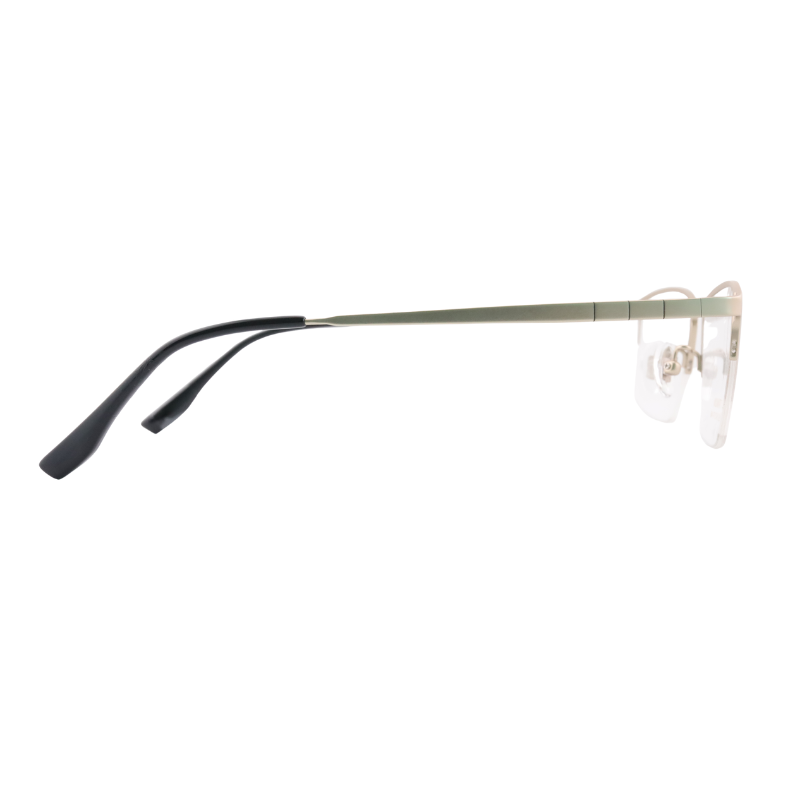
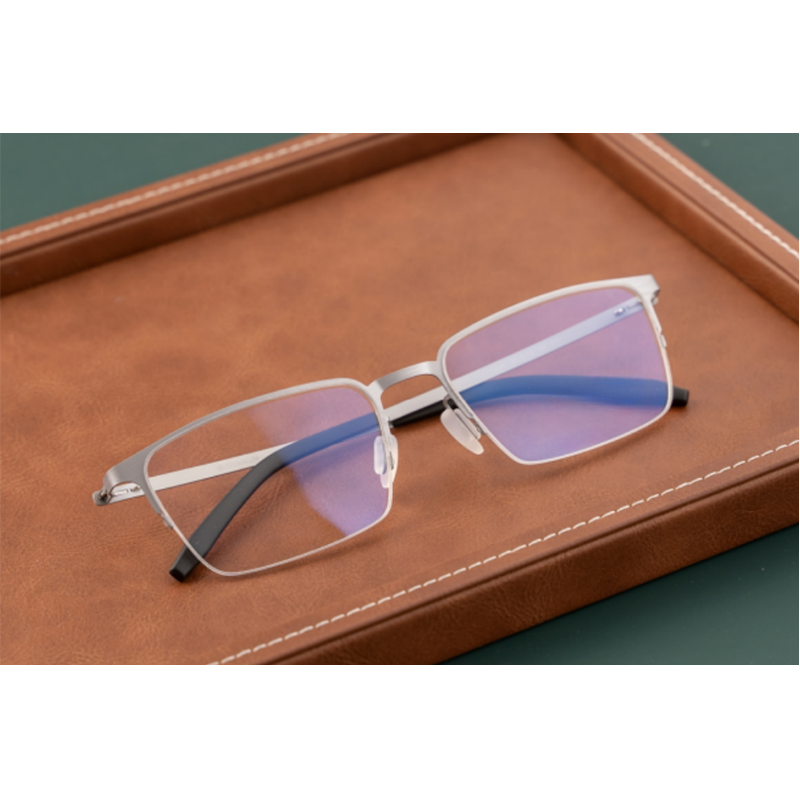
- Half rim or semi-rimless: lighter to look at, with a clear lower edge. Good for reading down at a desk.
- Rimless: the lightest look. The lenses carry the frame, so ask your optician whether your prescription suits it.
Fit and PD
Fit matters as much as weight. A light frame that is too wide slides; one that is too narrow presses at the temples.
Your pupillary distance (PD) is the distance between the centres of your pupils, in millimetres. The lens maker uses it to place the optical centre of each lens in front of each pupil. It also tells you which frames fit your face: many shops, including ours, list a PD range for each frame. If your PD sits inside that range, the frame is a sensible size for you.
The PD your optician measured is the reference. If you do not have it, you can measure it at home with a ruler and a mirror, as our guide on how to measure PD at home shows. Our free face and PD measurement in the VisionCraft Center reads your PD, face width and bridge width with your camera. It runs in your browser, nothing is uploaded, and the numbers are estimates.
Three checks when you first put a frame on:
- Your eyes sit near the middle of each lens, side to side.
- The frame does not touch your cheeks when you smile.
- The arms rest on your ears without pressing behind them. Tip your head down: the frame should stay put.
Lens use: match the distance you work at
Most prescriptions are written for distance or for reading. A screen usually sits further away than a book and closer than the far wall. That is why the tape measurement matters.
- Distance or everyday prescription: fine if you look up and around a lot and the screen is clear with them.
- Reading lenses: made for close work. They can be too strong for a screen at arm's length. If you only need help up close, reading strength matters: in our shop reading lenses run from +0.75 to +6.00.
- A prescription for screen distance: if your main work is at one screen distance, tell your optician the distance you measured. They can write a prescription for that range. Any shop that makes lenses from your sight test can then make it.
Over 40 or so, many people find that one strength no longer covers screen and paper. That is a conversation for your optician, not a lens you should guess online. Our article on how to read an eyeglass prescription helps you understand what they write.
Lens index: thinner for stronger prescriptions
The index of a lens material says how strongly it bends light. A higher index makes a thinner, lighter lens for the same prescription. For a mild prescription, a standard index is fine. For a strong one, a higher index keeps the edges thin and the pair lighter, which counts on a long day.
Here are the OpteLux lens thickness options and prices at the time of writing:
| Lens index | Typical use | Price at the time of writing |
|---|---|---|
| 1.50 to 1.52 | Standard, mild prescriptions | +$110 |
| 1.53 to 1.60 | Mid-index | +$230 |
| 1.61 to 1.67 | High-index | +$360 |
| 1.70 to 1.74 | High-index, strong prescriptions | +$810 |
| 1.75 and above | Ultra high | Price on request |
Our guide to lens index explains how to pick one from your prescription numbers. If in doubt, ask your optician which index they would use.
Coatings: what is worth paying for at work
Coatings decide how the lens behaves in daily use: how easily it scratches, how quickly it smears and how much it reflects. For a work pair, think about three things.
- Hardness and easy cleaning. A work pair is cleaned many times a day. A hardened coating and an easy-clean film help it stay clear.
- Reflections. Overhead lights and windows reflect in an uncoated lens. Ask what each coating does about reflections before you choose.
- Fog and light changes. If you wear a mask, cycle to work or walk in and out of cold air, an anti-fog film helps. If you go outside often, light-adaptive lenses darken outdoors and stay clear indoors.
At OpteLux the coatings come in three levels. Standard (+$180) has a hardened coating, easy-clean film and mirror film. Business (+$360) has diamond crystal film and anti-fog film, with light-adaptive lenses included. Premium (+$890) has diamond crystal A4, polarized, high sensitivity and full vision. Prices are at the time of writing.
A word on blue-light filters
A blue-light filter is an option, not a requirement. Ours filters part of the blue light from screens, and it is an extra at +$60. Some people like the slightly warmer look of the screen with it. It does not replace the right prescription, good lighting, and regular breaks away from the screen. Our article on blue-light glasses covers what they do and do not do.
Set up the screen distance too
Glasses and desk work together. A good pair at the wrong distance still feels wrong. A few simple habits:
- Keep the screen at the distance your lenses were made for. If you change desks, measure again.
- Put the top of the screen at or a little below eye level, so you look slightly down.
- Reduce bright light behind the screen and reflections on it.
- Look away from the screen into the distance now and then.
A second pair
A long working day is easier with a backup. A second pair is not a luxury if you rely on glasses to work.
- A spare in the desk drawer: the same prescription, in case the main pair breaks or is left at home.
- A screen pair and a general pair: one made for your desk distance, one for everything else.
- Sunglasses for the commute: prescription sunglasses, light-adaptive lenses, or a clip-on that sits over your everyday frame.
Keep each pair in a hard case and clean the lenses with a microfibre cloth, not a shirt sleeve.
A short checklist
- Measure your screen distance and note how you spend the day.
- Get your PD from your optician, or measure it and use the result as an estimate.
- Choose a light frame, with its weight stated, and check what the figure includes.
- Check that your PD sits inside the frame's PD range.
- Pick the lens use that matches your working distance.
- Choose a lens index for your prescription strength.
- Choose a coating for your day: cleaning, reflections, fog, outdoor light.
- Decide whether you need a second pair.
Where to start at OpteLux
Our frames are mainly titanium and made for long working days. Our lenses are designed in Japan and France and made in Asia and France. If you want to put the steps above together in one place, Design your pair lets you start from your PD, choose a frame that fits, then choose lenses and coating, with the price shown as you go. Frames to look at for work include the ONC8803, the ONC536 full rim, the OSZ968 semi-rimless and the adjustable OLT950. New customers get 25% off the first order.
Questions and answers
What makes glasses good for office work?
A light frame that fits your PD, lenses made for the distance of your screen, and a hardened, easy-clean coating. Measure your screen distance and tell your optician, so the prescription matches how you work.
How light should work glasses be?
As light as you can find, with the weight stated and clear about what it includes. The OpteLux ONC8803 weighs 7.83 g, frame only, and every labelled OpteLux frame weighed so far is under 15 g.
Do I need a blue-light filter for work?
It is optional. The OpteLux blue-light filter filters part of the blue light from screens. It does not replace the right prescription, good lighting and breaks away from the screen.
Should I have a second pair of glasses for work?
If you rely on glasses to work, a spare is sensible. Many people also keep one pair for the desk and one for everything else, or add sunglasses for the commute.
General guidance, not a replacement for an eye examination by a qualified specialist. About the author.