How Much Do Titanium Glasses Weigh? We Put Six on a Scale
By Dr. Qaria, , updated
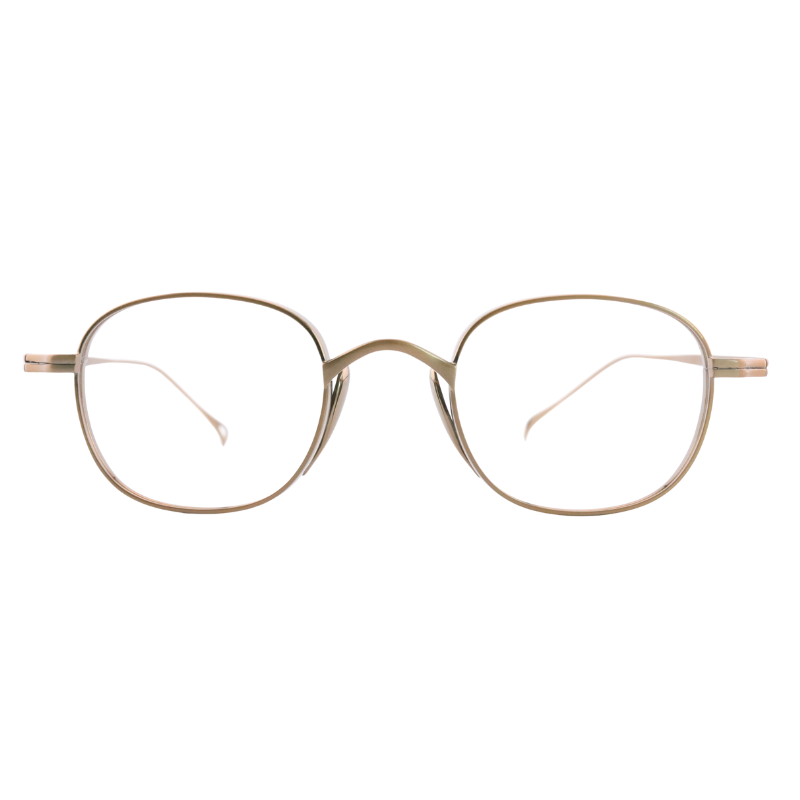
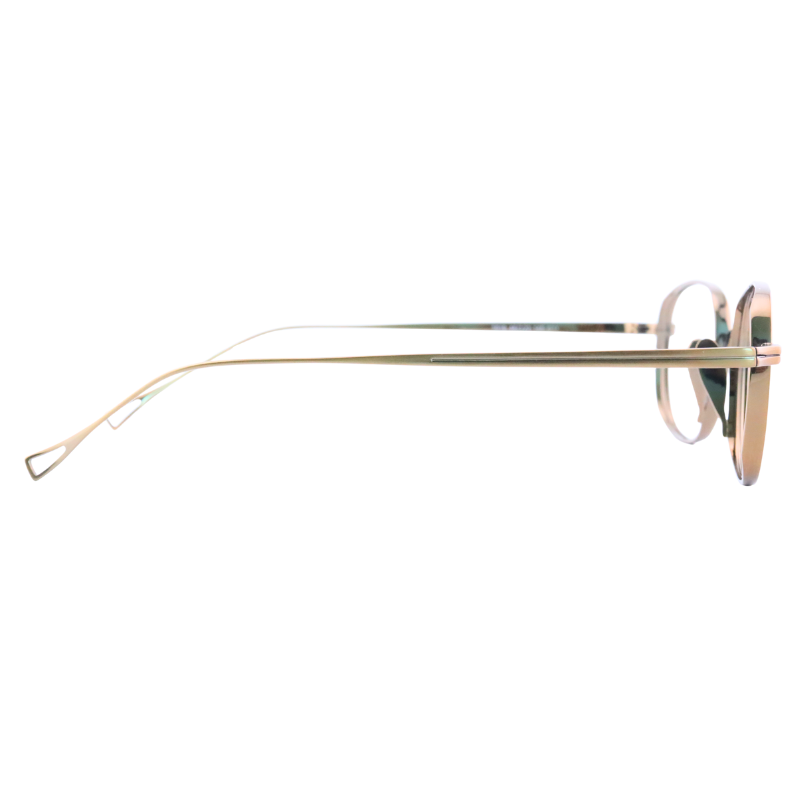
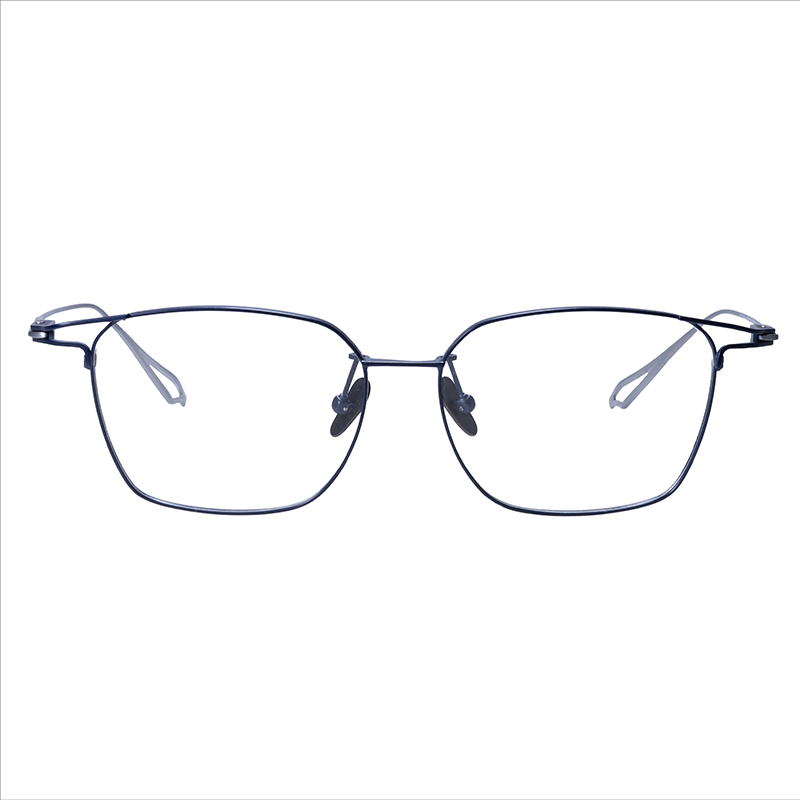
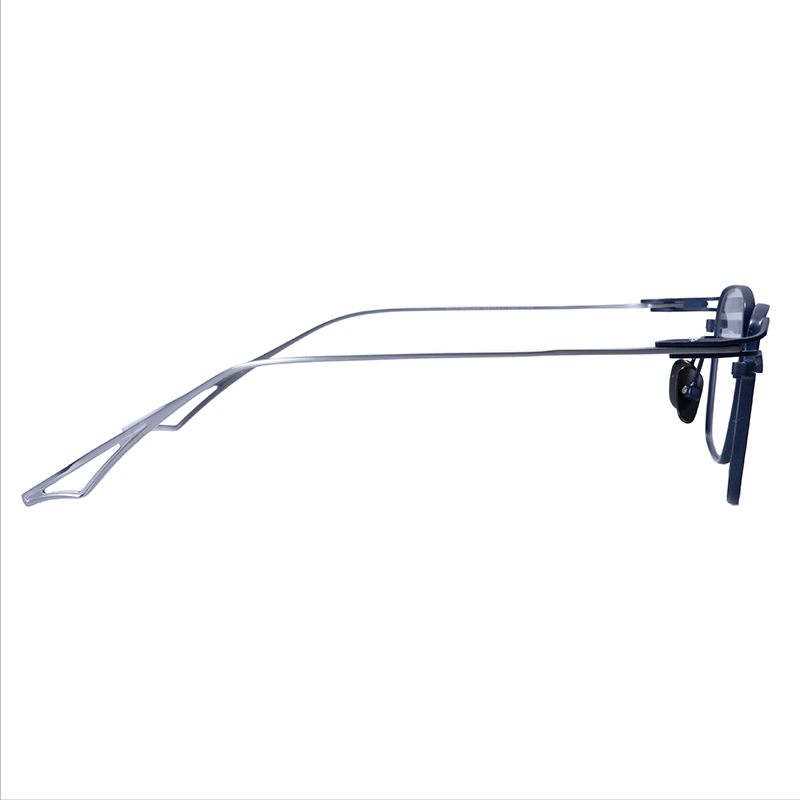
Most titanium eyeglass frames weigh between roughly 7 and 15 grams without lenses. We put six OpteLux titanium frames on a calibrated jeweller’s scale and photographed every reading. The lightest, the ONC8803, came in at 7.83 grams. The heaviest, the OSZCN054, at 13.77 grams. Every frame measured came in under 15 grams, frame only.
Key takeaways
- Six OpteLux titanium frames were weighed on a scale and photographed. The verified range is 7.83 g to 13.77 g, frame only.
- These are bare frames. Prescription lenses add weight, and how much depends on your prescription, lens material and lens index.
- Titanium is light because of physics, not marketing: its density is 4.506 g/cm³ against roughly 8.00 g/cm³ for common stainless steel.
- Almost no eyewear brand publishes per-model frame weights. That is why “lightweight” is usually an adjective rather than a number.
- We only quote figures for frames we have actually weighed. Two further readings are being held back because the SKU tag was not legible enough to publish.
How much do titanium glasses frames weigh?
Here are the readings, each taken on a bare frame with no lenses fitted. Every one of these is a titanium frame from the current OpteLux catalogue, and each figure corresponds to a photograph of the frame sitting on the scale.
| Model | Frame weight (no lenses) | Shape |
|---|---|---|
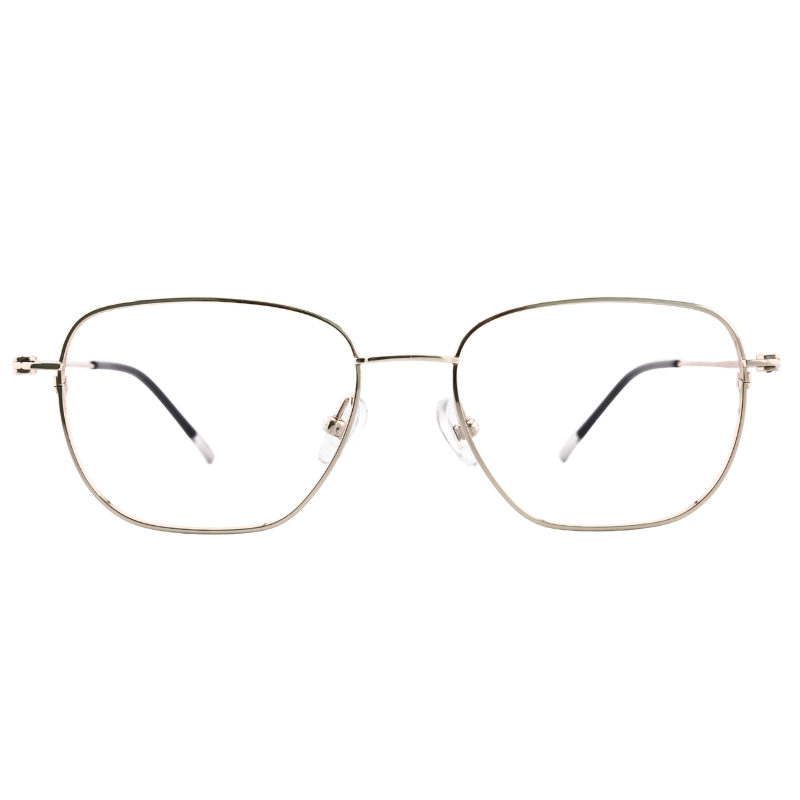
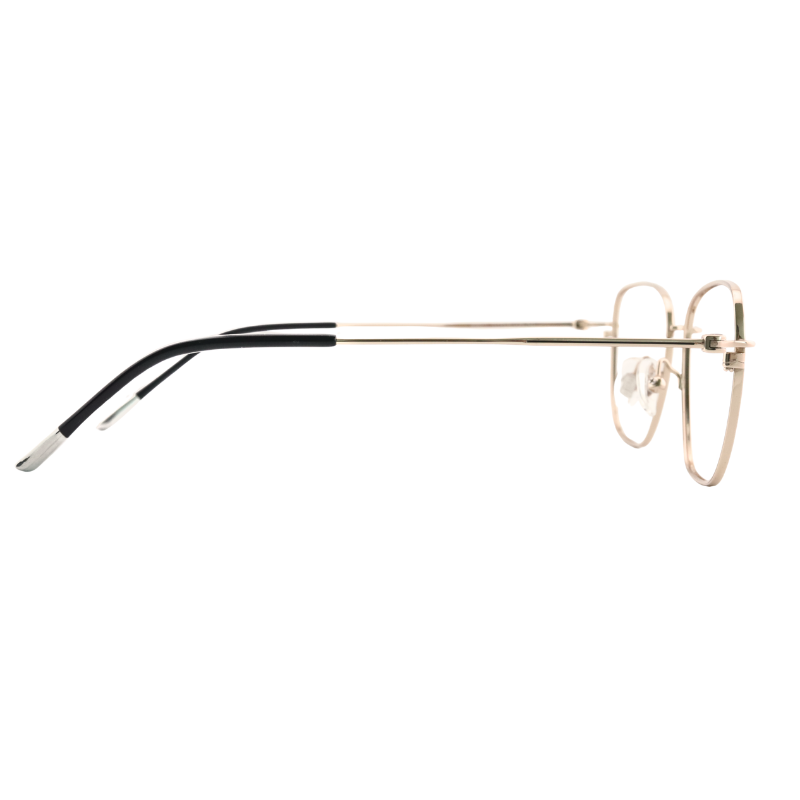
| OpteLux ONC8803 | 7.83 g | Square |
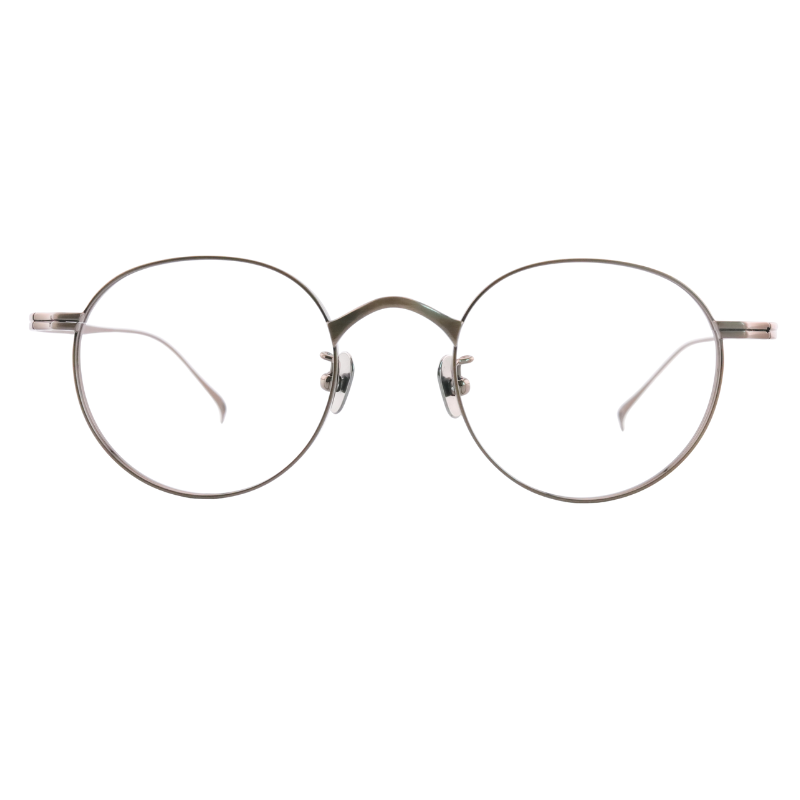
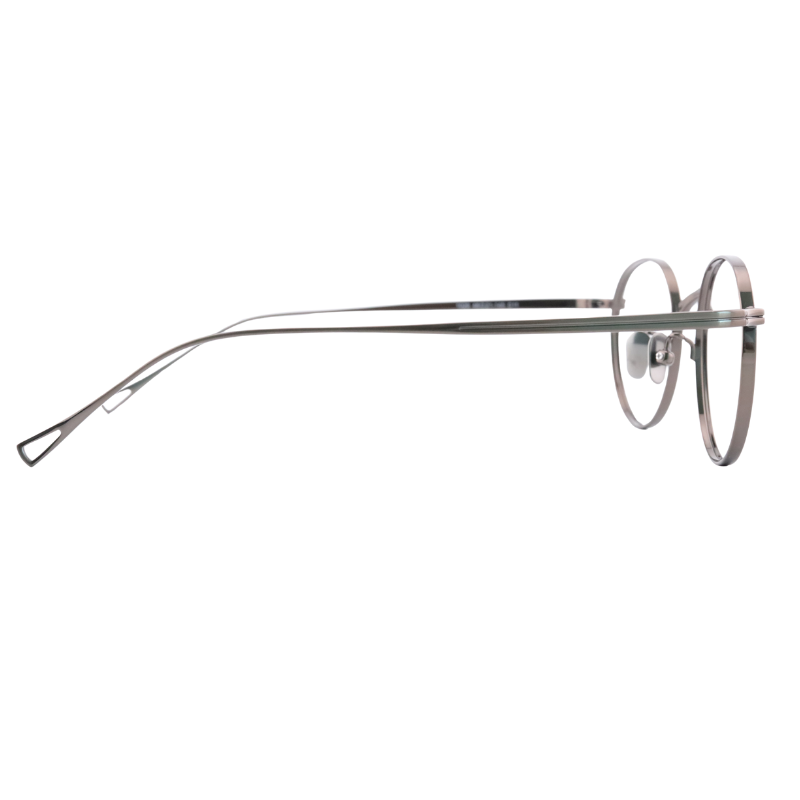
| OpteLux ONC129 | 8.36 g | Round |
| OpteLux ONC119 | 8.69 g | Round |
| OpteLux ONC7 (sold as ONC7C2) | 12.46 g | Square |
| OpteLux OSZCN054 | 13.77 g | Square |
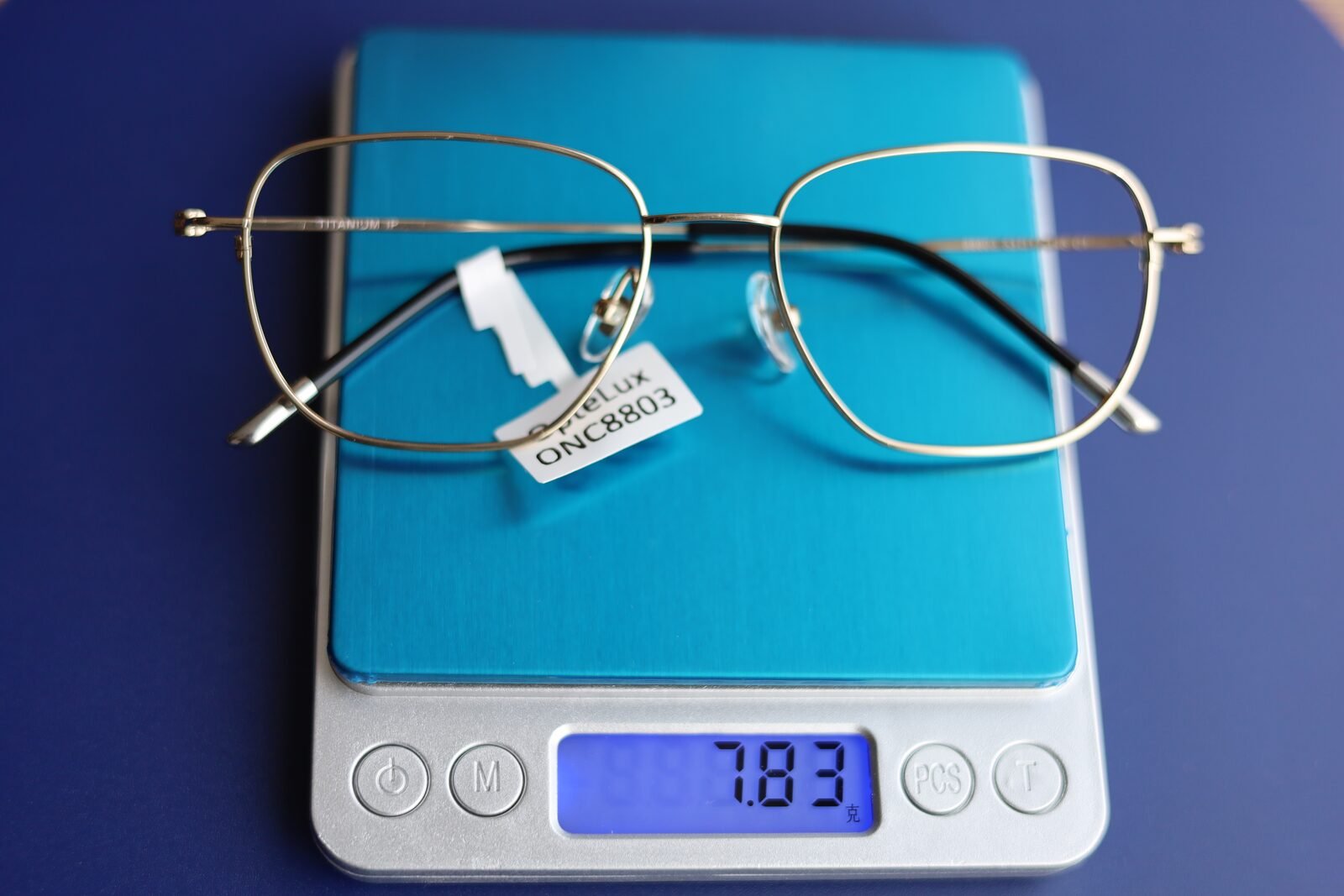
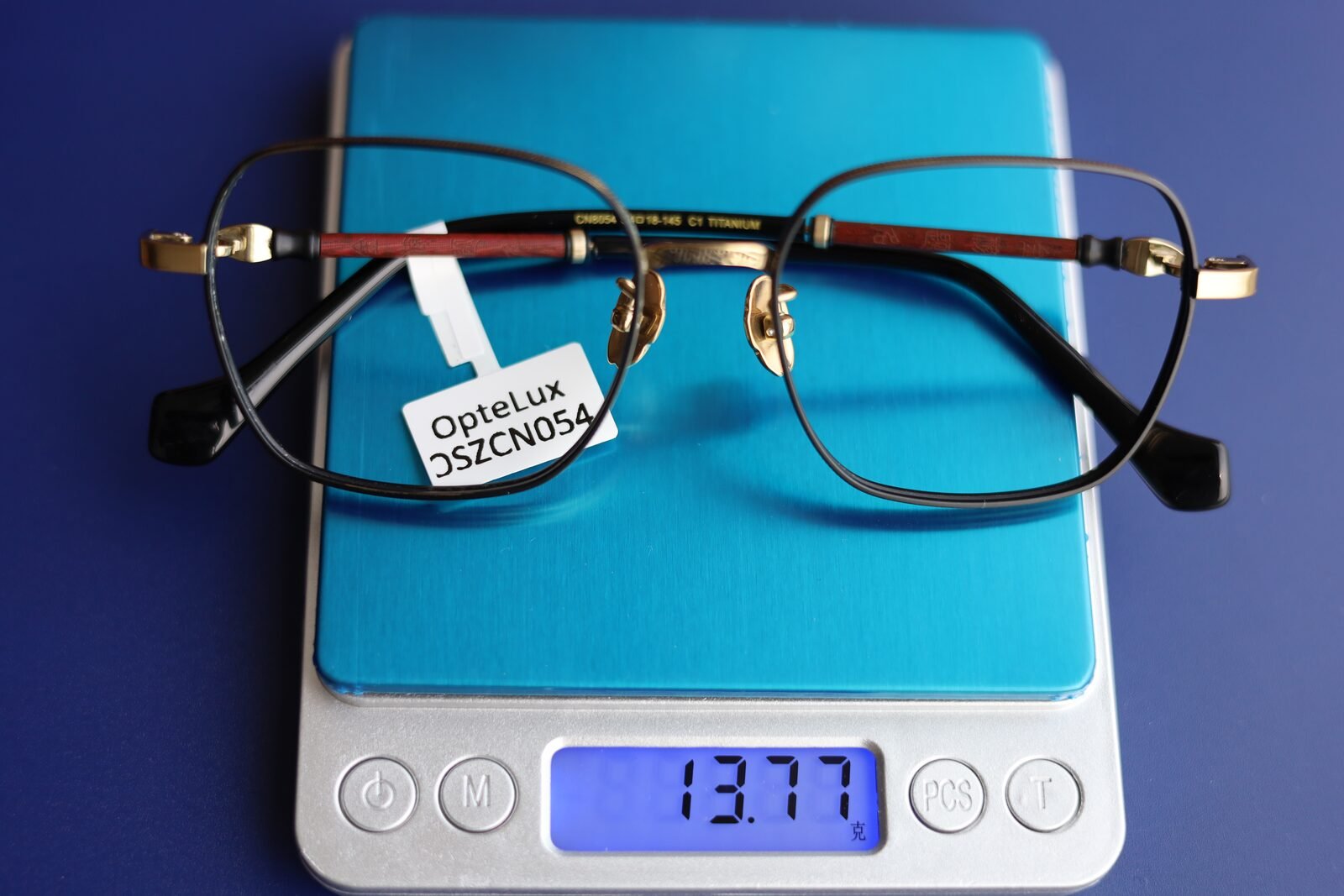
Two of the six frames carried temple markings reading “TITANIUM IP”, the ONC8803 and the ONC129, and the OSZCN054 is marked 18-145 C1 TITANIUM on the inside of the temple. If you want the background on what those markings do and do not tell you, our guide to titanium grades in eyewear covers the labelling in detail. For the wider case on the material itself, start with the pillar guide: titanium eyeglass frames and why professionals are switching.
What we are not publishing, and why
Nine frames were weighed in total. Four of those readings are not in the table above.
One frame read 10.79 g but its SKU tag was photographed upside-down and partly obscured, so we cannot say with confidence which model it was. Another round metal frame was weighed twice, at 10.42 g and 10.43 g, a good sign for the scale’s repeatability, but the frame carried no legible tag. A fifth reading, 15.61 g, was a comparison frame that is not an OpteLux product and was weighed with lenses fitted, so it is not a like-for-like number and we are not presenting it as one.
We would rather publish five numbers we can stand behind than nine that need footnotes. If the remaining frames are re-weighed and identified, this article gets updated.
Why is titanium lighter than steel?
Because it is genuinely less dense, and the gap is large.
Titanium has a density of 4.506 grams per cubic centimetre (Royal Society of Chemistry, Periodic Table, Titanium, retrieved 10 August 2026). Grade 304 stainless steel, one of the most common stainless alloys, is listed at 8000 kg/m³, 8.00 g/cm³ (AZoM, Stainless Steel Grade 304, retrieved 10 August 2026).
Take the same frame geometry and make it in each material and the titanium version is roughly 44% lighter. That is not a manufacturing trick or a coating; it is a property of the metal. It is also why titanium ends up in aerospace and surgical implants, where every gram is argued over.
The practical consequence is that a titanium frame can be built with enough material to be rigid and still land under 15 grams. A steel frame reaching the same weight has to be made thinner, and thinner usually means it flexes more at the hinge and the bridge.
Do these weights include the lenses?
No, and this is the single most important caveat on this page.
Every figure in the table is a bare frame. A finished pair of glasses is the frame plus two lenses, and the lenses are frequently the heavier half. Lens weight depends on your prescription strength, the lens diameter needed to fill the frame, the lens material and its refractive index. A mild prescription in a high-index material adds relatively little. A strong prescription in a large frame adds a great deal more.
OpteLux lenses are designed in Japan and France and made in Asia and France, with high-index options available precisely because they reduce lens thickness and therefore lens weight. But we are not going to print a “total weight” figure, because there isn’t one, it changes with every prescription.
If a retailer quotes you a single total weight for a prescription frame without asking what your prescription is, treat the number with suspicion.
What does a few grams actually feel like?
Honestly? At the extremes, a lot. In the middle, less than the marketing suggests.
The gap between our lightest and heaviest measured frame is 5.94 grams, the ONC8803 at 7.83 g against the OSZCN054 at 13.77 g. That is a 76% difference in frame weight, and it is noticeable if you wear glasses from breakfast until late evening. Where the weight sits matters as much as the total: a frame that carries its mass out at the temples behaves differently on the face from one that concentrates it at the bridge.
Below about 10 grams, most wearers stop registering the frame at all after the first few minutes. Between 10 and 15 grams, a well-balanced frame with properly adjusted nose pads still disappears; a poorly adjusted one does not. This is why fit matters more than the last gram, and why we would rather sell you a 12-gram frame that fits than an 8-gram frame that does not.
If your glasses are uncomfortable, sliding, or leaving marks, that is usually an adjustment or sizing problem rather than a weight problem, and an optician can often fix it in a few minutes. Persistent discomfort, headaches or changes in your vision are worth raising with an eye-care professional rather than solving by buying a lighter frame.
How do you weigh a pair of glasses at home?
You can check any frame you already own in about two minutes. This is exactly the method we used.
- Use a jeweller’s or kitchen scale that reads to 0.01 g. A standard kitchen scale rounding to the nearest gram is too coarse, it cannot tell 7.8 g from 8.4 g, which is most of the range we are discussing.
- Put the scale on a hard, level surface. Not a placemat, not a tablecloth. A soft surface skews the reading.
- Tare it to zero with nothing on the pan and confirm the display reads 0.00.
- Place the frame on the pan with the temples folded so the whole frame is supported and nothing overhangs the edge.
- Wait for the display to settle before reading it, then record the figure.
- Repeat the measurement twice more. If the three readings agree to within about 0.05 g, the number is trustworthy. If they do not, your surface is not level or the scale needs recalibrating.
- Note whether lenses were fitted. A weight without this note is meaningless. Ours are all frame only.
If you weigh a frame you bought elsewhere and it comes in heavier than its marketing implied, you are not imagining things, see the next section.
Why don’t eyewear brands publish frame weights?
Three reasons, and none of them are good news for the buyer.
The first is that a published number is a commitment. “Featherlight” cannot be checked. “8.36 grams” can be checked by anyone with a scale, and if the frame arrives at 14 grams the brand has a problem. Adjectives carry no risk.
The second is that weight varies across a range. A brand selling sixty frames would have to weigh sixty frames, keep the figures current as suppliers change, and explain why the heaviest ones are heavy. It is easier to say nothing.
The third is that most eyewear is sold on how it looks, and specification-led buyers are a minority. That minority happens to include a lot of people who wear glasses ten hours a day for work.
| What the label usually says | What it does not tell you | What to ask instead |
|---|---|---|
| “Ultra-lightweight” | Any number at all | What does this frame weigh in grams, without lenses? |
| “Titanium” | Whether it is the whole frame or just the temples | Which parts are titanium, and what grade? |
| “Feels like nothing” | Whether it was measured or imagined | Has this specific model been weighed? |
| “8 to 15 g typical” | Which end of the range this model sits at | What is the figure for this SKU? |
Which OpteLux frame is the lightest?
Of the frames we have weighed, the ONC8803 square frame at 7.83 grams is the lightest. The ONC129 at 8.36 g and the ONC119 at 8.69 g are within a gram of it, and in practice the three are indistinguishable on the face.
We are deliberately not claiming these are the lightest frames in the catalogue. They are the lightest of the ones we have put on a scale. There are over 150 products on the site and nine measured frames, and we are not going to pretend those are the same thing. More models are being weighed, and this page will be updated as the readings come in.
To be plain about something else: OpteLux does not yet have published customer reviews. We would rather give you measured specifications and a 30-day return window than imply a track record we have not built yet. The scale reading is the review.
How do you choose a lightweight frame that actually fits?
Weight is one specification among four that decide whether a frame disappears on your face or annoys you all day. The others are frame width against your face width, bridge width, and temple length.
Our VisionCraft Center measures four of those dimensions from your camera, face width, canthal distance, bridge width and pupillary distance, so you can match a frame’s published sizing to your own measurements rather than guessing. It is a third-party tool and takes a few seconds to start your camera, so give it a moment before assuming it has failed.
Once you have your numbers, browse the titanium eyeglasses range and check the frame dimensions on each product page against them. If you spend most of your day in front of a screen, our guide to choosing glasses for working at a computer all day covers the rest of the decision, and how eyewear reads in professional settings covers the part that has nothing to do with grams.
Frequently asked questions
How much does a normal pair of glasses weigh?
Frames vary widely by material. The titanium frames we measured ran from 7.83 g to 13.77 g without lenses. Acetate and steel frames are generally heavier for the same shape, because both materials are denser than titanium relative to the volume of material a frame needs. The only figure that means anything is the one published for the specific model you are buying.
Are lighter glasses always more comfortable?
No. A light frame that is too wide will slide down your nose all day, and a heavier frame that fits properly will not. Weight matters most once fit is already correct. Treat it as a tiebreaker between two frames that both fit, not as the first thing you filter on.
Is 15 grams heavy for glasses?
For a bare titanium frame it is at the upper end. Every OpteLux frame we have weighed came in below it. For a finished pair with prescription lenses fitted, 15 grams and above is entirely ordinary, because the lenses often weigh as much as the frame.
Does the finish or colour change the weight?
Not to any degree a wearer would notice. Ion-plated finishes such as the “TITANIUM IP” marking on the ONC8803 and ONC129 add a coating measured in microns. Frame size, shape and how much metal the design uses matter far more.
Why is one titanium frame nearly twice the weight of another?
Design, not material. The 13.77 g OSZCN054 is a fuller square frame with more metal in the rim and temples than the 7.83 g ONC8803. Both are titanium. A rimless or semi-rimless design removes material and therefore weight; a full-rim design with a chunkier profile adds it back.
Can I trust a brand that does not publish frame weights?
It is not evidence of a bad product, most brands publish nothing, including some very good ones. But if two frames are otherwise comparable and one comes with a measured figure, you know what you are getting with one of them and not the other.
Will you publish weights for the rest of the range?
That is the plan. Nine frames have been weighed so far and five are published here. As more models go on the scale, the table above will grow and this article will be updated with the date of each revision.
The short version
Titanium frames are light because titanium is roughly 44% less dense than common stainless steel, and the six OpteLux frames we put on a scale confirm it: 7.83 g to 13.77 g, frame only, every one under 15 grams. Lenses are extra and depend entirely on your prescription.
If you want to see the frames in the table, they are all in the titanium eyeglasses range. New customers get 25% off their first order, and everything ships with a 30-day return window in case the numbers do not translate the way you expected on your face.
Related reading
- Titanium vs acetate vs stainless steel frames: which should you buy?
- Titanium Eyeglass Frames: Why Professionals Are Switching, the pillar guide to the material
- Titanium Grades in Eyewear: What the Label Does Not Tell You
- How Eyewear Reads in Professional Settings
- How to Choose the Best Glasses for Working at a Computer All Day
- Top Glasses Frames for Men in 2026
General guidance, not a replacement for an eye examination by a qualified specialist. About the author.