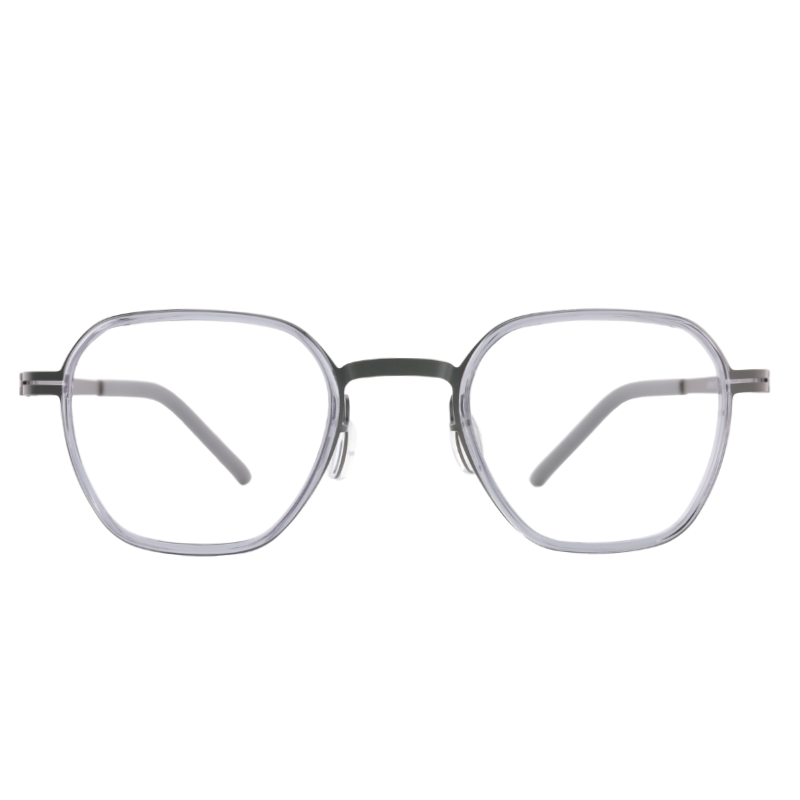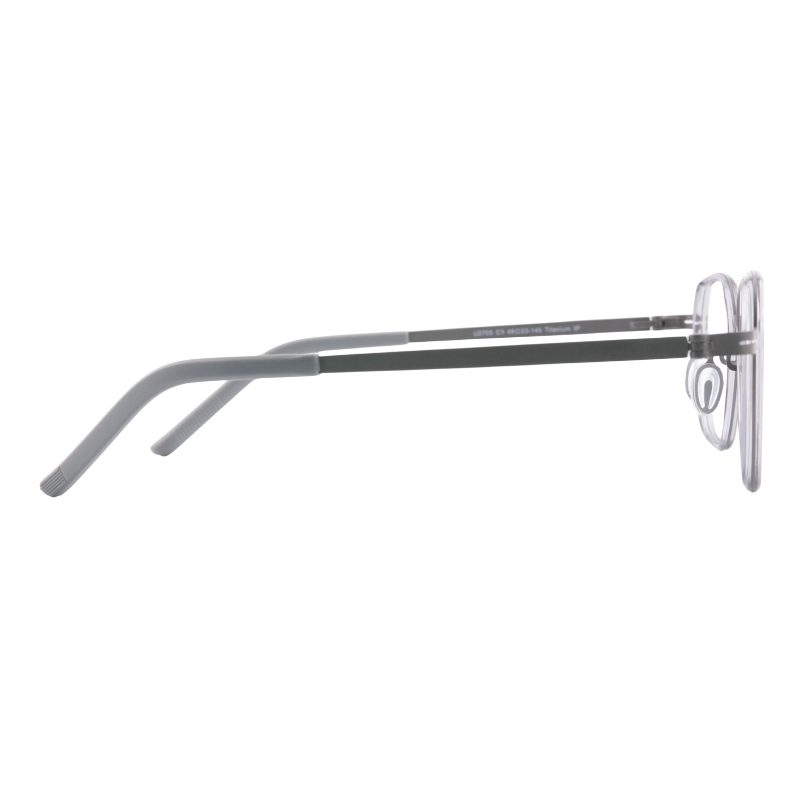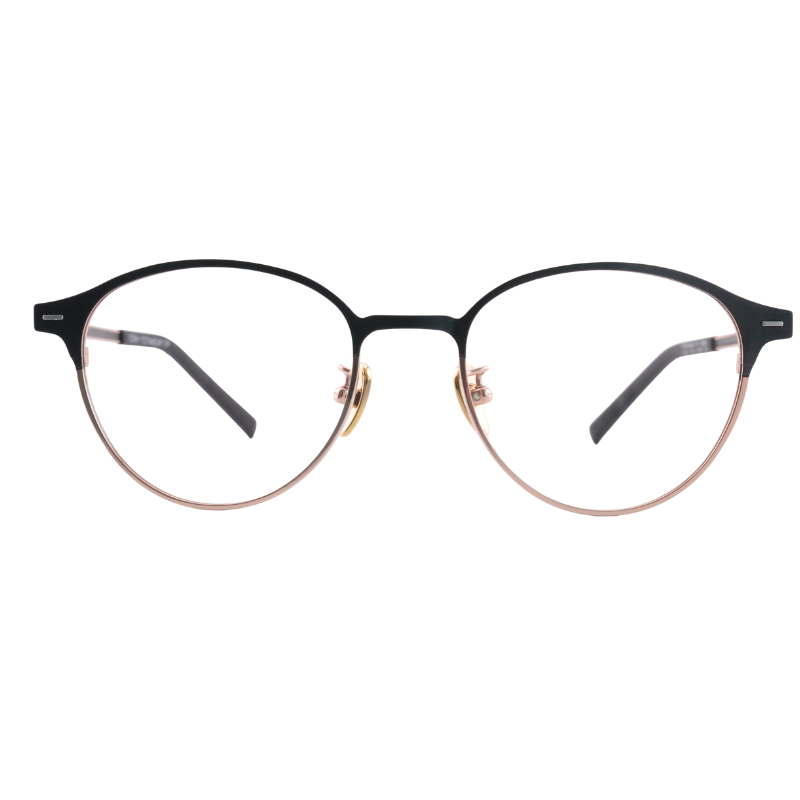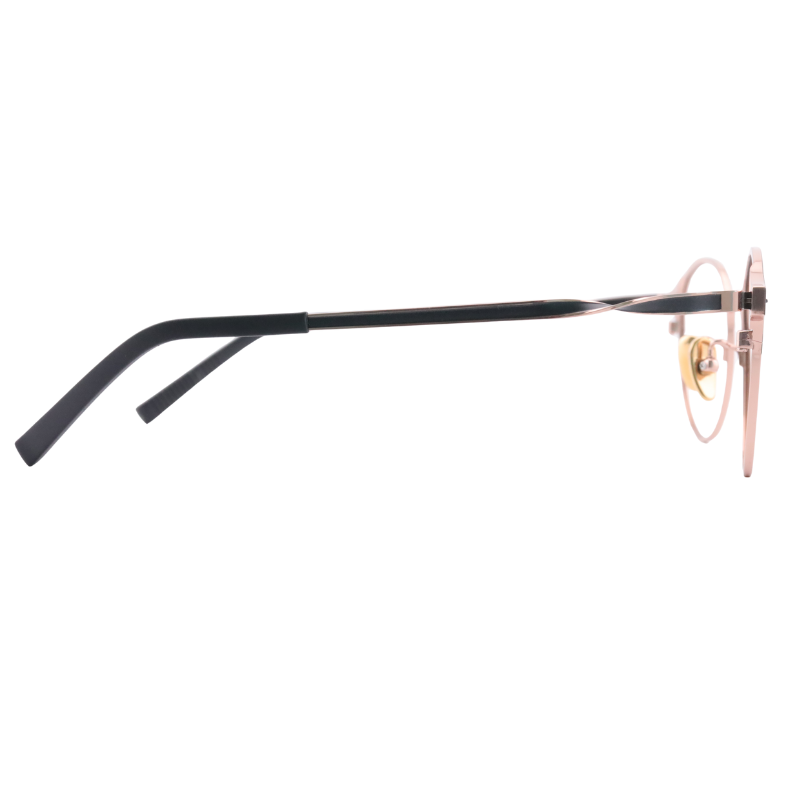
Glasses Size Explained: What 52-18-145 Means
By Dr. Qaria, , updated
Look at the inside of the arm of almost any pair of glasses and you will find a short row of numbers, often something like 52-18-145, sometimes with a small square between the first two. Those three numbers are the frame's size in millimetres. They are the most useful facts you have when you buy glasses online, and most people never read them. This guide explains what each number means, how to find the size that suits you, and what to do when your numbers fall between two frames.
The advice holds wherever you buy. Where we use OpteLux frames as examples, we say so, and the figures are at the time of writing. For the whole order, from sight test to lenses, see our guide on how to buy glasses online.
The three numbers, one by one
- Lens width (the first number, also called the eye size). The width of one lens at its widest point, in millimetres. In 52-18-145 it is 52 mm.
- Bridge width (the second number). The gap between the two lenses, which is the part that sits over your nose. In 52-18-145 it is 18 mm.
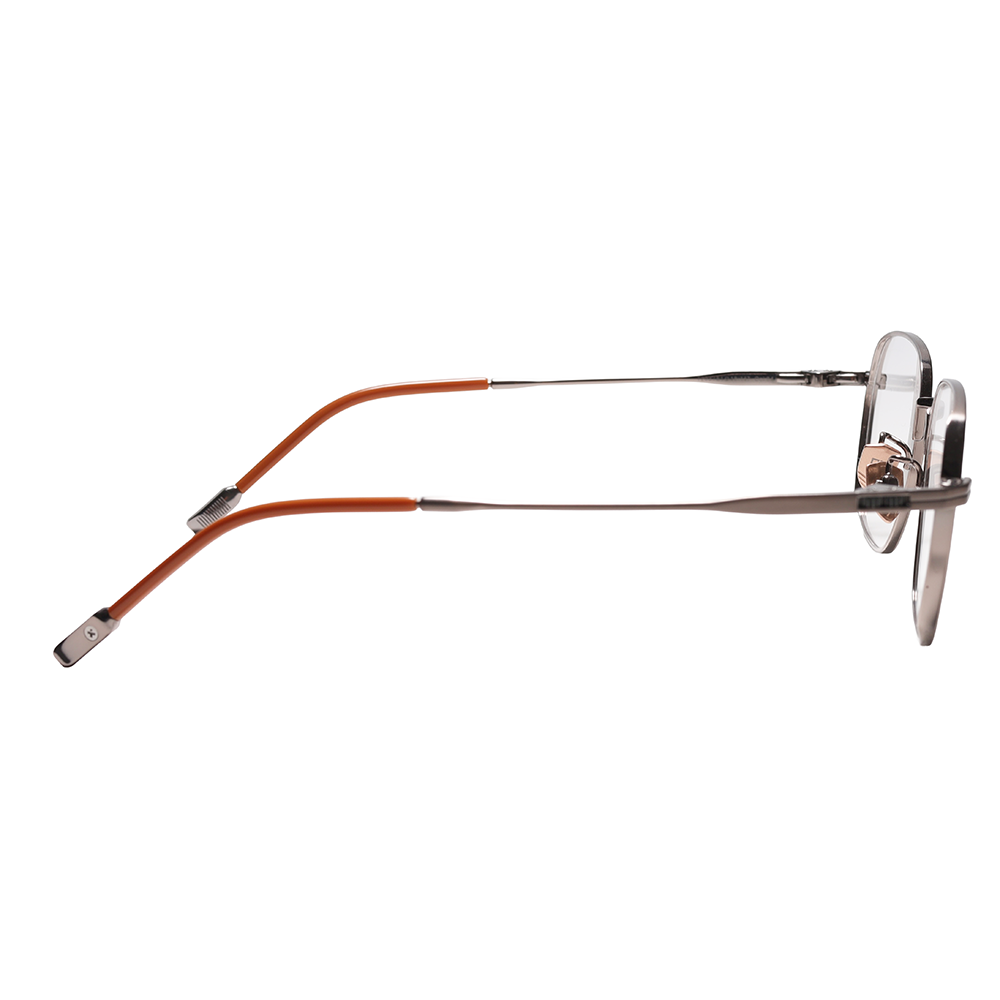
- Temple length (the third number). The length of each arm, measured from the hinge to the tip that curves behind the ear. In 52-18-145 it is 145 mm.
The small square, when you see it, means the frame was measured by the boxing system: each lens is drawn inside the smallest box that holds it, and the width is taken from that box. It does not change how you read the numbers. Some makers also print a model code and a colour code on the same arm; those are not sizes.
A fourth figure, the lens height, is rarely printed but matters for some lenses. It is the height of the lens from top to bottom. A shallow lens can be too short for a progressive lens, which needs room for its distance, middle and near zones. If you wear progressives, ask for the lens height before you order.
The figure that ties them together: frame PD
Add the lens width and the bridge width and you get the distance between the centres of the two lenses. Opticians call this the frame PD, because it is the frame's version of your pupillary distance, the distance between the centres of your pupils. For a 52-18 frame it is 70 mm.
Your own PD and the frame PD do not have to be equal. The lens maker moves the optical centre of each lens inwards or outwards to sit in front of your pupil. But the further your PD is from the frame PD, the more each lens has to be shifted, and with a strong prescription that can make one edge of the lens thicker than the other. A frame whose centres are close to your pupils tends to look balanced on the face as well: your eyes sit near the middle of each lens instead of towards the inner or outer edge.
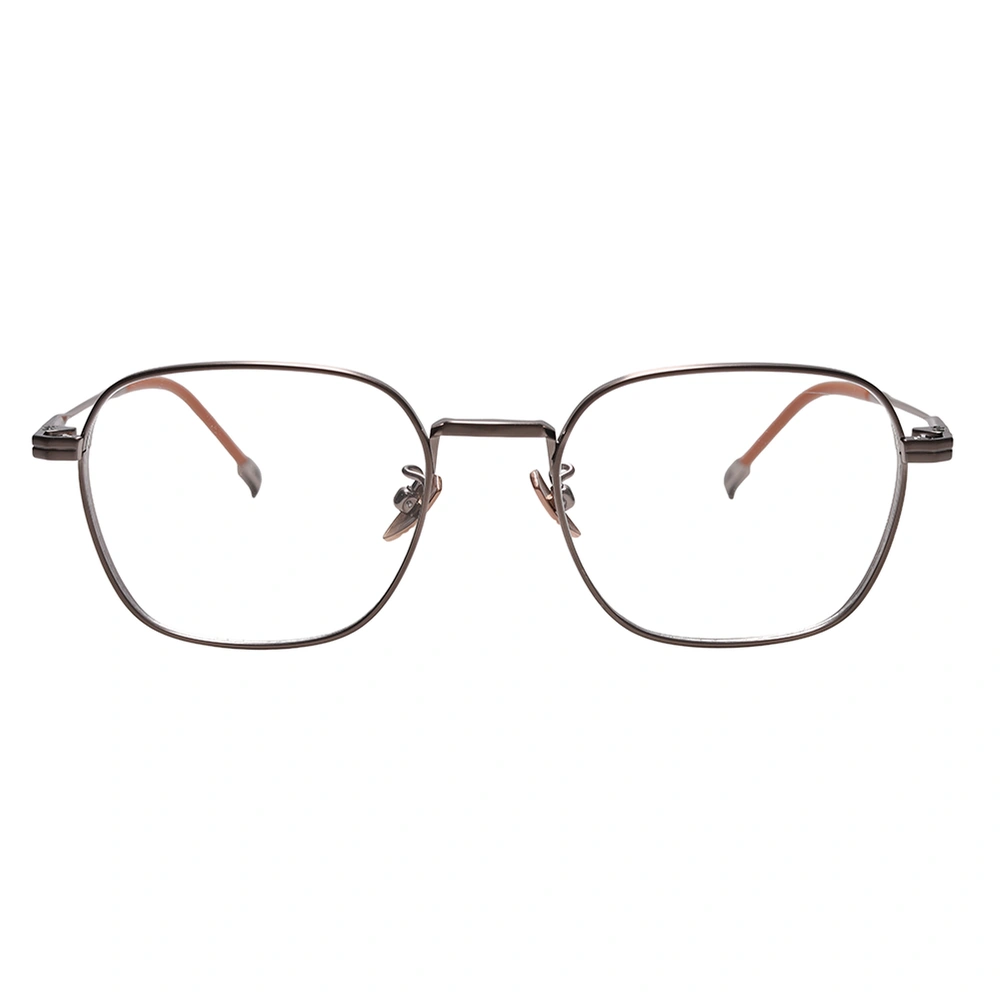
This is why almost every OpteLux eyeglass frame lists the PD range it suits on its product page, as "Fits a PD of". The OLT203, for example, is 51-18-147, so its lens centres sit 69 mm apart, and it is listed for PDs from 61 to 71 mm. The range sits mostly below the frame PD because a wearer's PD is usually smaller than the frame PD, and the lens maker moves the optical centres inwards. Across our eyeglass frames at the time of writing, these ranges run from 54 to 64 mm at the narrow end to 67 to 77 mm at the wide end. If your PD sits inside a frame's range, the frame is a sensible size for you; if it sits outside, look at another frame before you look at anything else.
If you do not know your PD, it is sometimes written on your sight test, or your optician can measure it. Our guide on how to measure your PD at home explains the methods, and the face and PD measurement in the VisionCraft Center gives an estimate in your own browser, with nothing uploaded. Treat any home figure as an estimate; your optician's measurement stays the reference.
Bridge width: the number your nose decides
The bridge carries most of the weight of the glasses, so a bridge that does not suit you is felt all day. Too narrow and the frame sits high and pinches. Too wide and it slides down, so you keep pushing it back up.
How much the bridge number matters depends on the frame. Metal frames usually rest on two small nose pads on adjustable arms, and an optician can move the pads closer together or further apart, which makes the bridge more forgiving. Plastic frames often have a fixed bridge moulded into the front, with no pads, so the printed bridge width and the shape of your nose have to agree from the start. Our comparison of titanium, acetate and stainless steel frames explains how each material can be adjusted.
Among OpteLux eyeglass frames at the time of writing, bridge widths run from 12 mm to 23 mm. A narrow bridge such as the 12 mm of the OSZCN056 half-rim frame suits a narrow nose and a narrow PD; it is listed for PDs from 54 to 64 mm. A wide bridge such as the 23 mm of the OHN275 suits a broader nose.
Temple length: the number behind your ears
The temple should reach past the top of the ear and curve down behind it, so the glasses are held at three points: the nose and both ears. If the temples are too short, the bend lands on top of the ear and presses there, or the front is pulled towards your face. If they are too long, the bend sits too far back, nothing holds the glasses behind the ear, and they slip when you look down.
Temple length tends to follow head size. For adult OpteLux eyeglass frames at the time of writing, temples run from 138 mm to 155 mm. Of these, the OSZ636 half-rim frame has the longest, at 155 mm, which is worth knowing if most frames feel short on you. Our children's frames are listed with temples of 120 to 138 mm.
Metal temples, titanium among them, can usually be bent a little at the tip by an optician to fit the shape behind your ear. That fine adjustment does not make a 135 mm temple behave like a 150 mm one, so start from a length close to the one you need.
Total width: the number that is rarely printed
The three printed numbers do not tell you how wide the whole frame is from one hinge to the other, because the end pieces and the shape of the front add to it. Two frames with the same 52-18 can differ by several millimetres across the front. The total width is what decides whether a frame looks right against the width of your face: the outer edges of the frame should sit about level with the widest part of your face, neither well inside it nor sticking out past your temples.
Where a maker publishes the total width, use it. Where it does not, compare with a pair you own, or try the frame on screen. The VisionCraft Center try-on, on frames that offer it, shows the real frame photo at its estimated real size against your face, which gives a fair first idea of width before you order. It is an estimate, not a fitting.
How to find your size in four steps
- Start from a pair that fits. Read the three numbers inside the arm of glasses you already find comfortable. If the print has worn off, measure the lens width and the bridge with a ruler in millimetres. This is the single best starting point.
- Know your PD. Take it from your sight test, ask your optician, or use a home estimate. Then keep only the frames whose PD range includes it.
- Allow a small margin. Lens width within about 2 mm of your current pair, the same bridge or one step either side, and a temple within about 5 mm will usually wear the same way. Larger jumps change the fit, so read them as a different size.
- Check the shape, not only the numbers. A round lens and a rectangular lens with the same width look very different. Our guide to eyeglasses for your face shape covers this part.
When you fall between two sizes
Most people are not an exact match for any frame, and that is normal. A few points help you choose.
- Strong prescriptions favour the smaller size. A smaller lens, with centres close to your PD, keeps a strong lens thinner and lighter. Our guide to lens index explains how prescription strength and lens material decide thickness.
- Bridge before lens width. A lens 2 mm wider changes the look a little. A bridge 2 mm too narrow can make the frame uncomfortable. If you must compromise, keep the bridge right.
- Metal frames forgive more. Adjustable nose pads and temples that can be shaped give an optician room to correct small differences after you receive the glasses.
- Rimless and half-rim frames have their own limits. Lenses in these frames are drilled or grooved, and the lens edge is on show, so the lens shape and size are part of the frame design. Our article on rimless, half-rim and full-rim glasses explains what that means for fit and lenses.
Common mistakes
- Reading the numbers in the wrong order. The order is always lens, bridge, temple.
- Choosing by a size word such as small, medium or large. These words are not standard and mean different things from one maker to the next. The millimetres are what count.
- Ignoring the PD. A frame can be the right width for your face and still place your eyes near the edge of each lens.
- Assuming an optician can fix any size. Pads and temples can be adjusted; the lens width and the shape of the front cannot.
Where to start at OpteLux
Our eyeglass product pages list the bridge, the temple and, for almost every frame, the PD range it suits. They do not list the lens width, so for that part use the PD range and the try-on. Our frames are mainly titanium, and our lenses are designed in Japan and France and made in Asia and France. If you would rather start from your face than from the catalogue, the frame suggestion tool suggests frames by PD fit and face shape, and Design your pair takes you from frame to lenses with the price shown as you go. Our 30-day returns apply to frames; see the return policy for lenses. New customers get 25% off the first order.
Questions and answers
What does 52-18-145 mean on glasses?
It is the frame size in millimetres: a lens 52 mm wide, a bridge of 18 mm between the lenses, and temples (arms) 145 mm long from the hinge to the tip.
How do I know what size glasses I need?
Read the numbers inside the arm of a pair that already fits you, then look for frames within about 2 mm on the lens, the same bridge or one step either side, and a temple within about 5 mm. Check that your PD sits inside the frame's PD range.
What is the frame PD and why does it matter?
Lens width plus bridge width gives the distance between the lens centres, the frame PD. When it is close to your own PD, your eyes sit near the middle of each lens and a strong lens needs less shifting, which keeps its edges more even.
Can an optician fix glasses that are the wrong size?
Partly. Nose pads and metal temple tips can be adjusted, which corrects small differences in bridge and temple fit. The lens width and the shape of the front cannot be changed, so choose those correctly from the start.
General guidance, not a replacement for an eye examination by a qualified specialist. About the author.