Clip-On vs Prescription Sunglasses: Which Should You Buy?
By Dr. Qaria,
If you wear glasses every day, clip-on sunglasses are the cheaper, lower-risk buy; prescription sunglasses are the better buy if you drive a lot, spend long hours outdoors, or dislike carrying anything extra. Photochromic lenses are a third option that works well on foot and poorly behind a windscreen. The right answer depends on where your bright hours happen.
Key takeaways
- Clip-ons cost a fraction of a second pair, work with the frame you already own, and are returnable. Prescription sunglasses are custom-made, so they are not.
- Prescription sunglasses give you one clean lens with no join, no second layer and no extra weight. That matters most for driving and for hours in the sun.
- Photochromic lenses darken outdoors and stay mostly clear inside cars, because vehicle glass blocks much of the UV that triggers them.
- UV protection is separate from tint, polarisation and price. Whatever you choose, look for 100% UV (UV400) protection.
- Most all-day glasses wearers end up owning two of the three. The question is which to buy first.
This guide compares the three ways a glasses wearer can get sun protection over a prescription. If you are still choosing a frame shape, start with our guide to aviator and pilot sunglasses for men, which covers fit, lens size and lens colour for the most popular shape. This article picks up where that one leaves off: which format?
What are the three ways to get sun protection over a prescription?
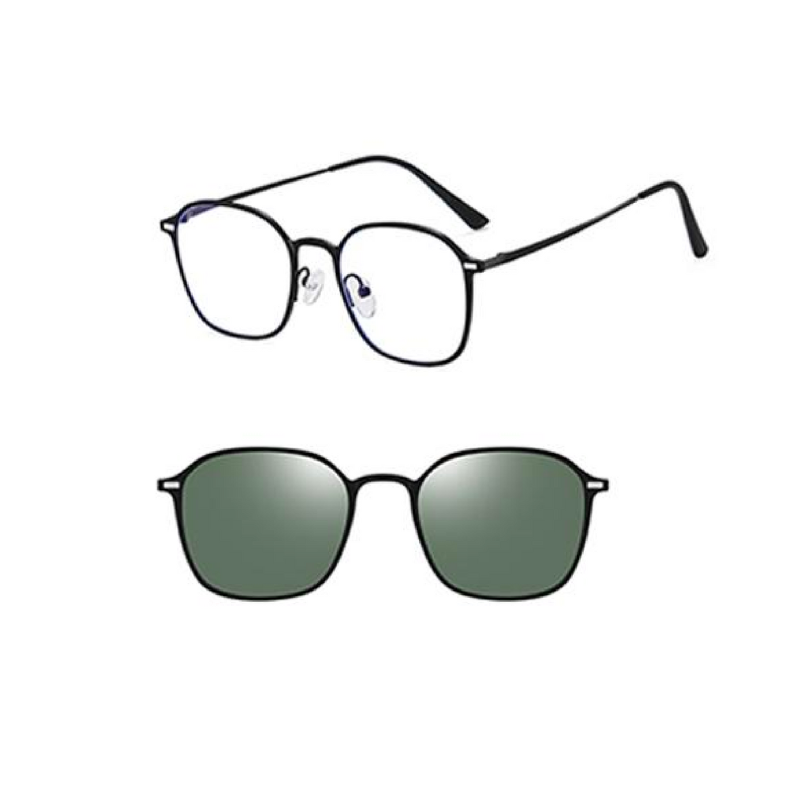
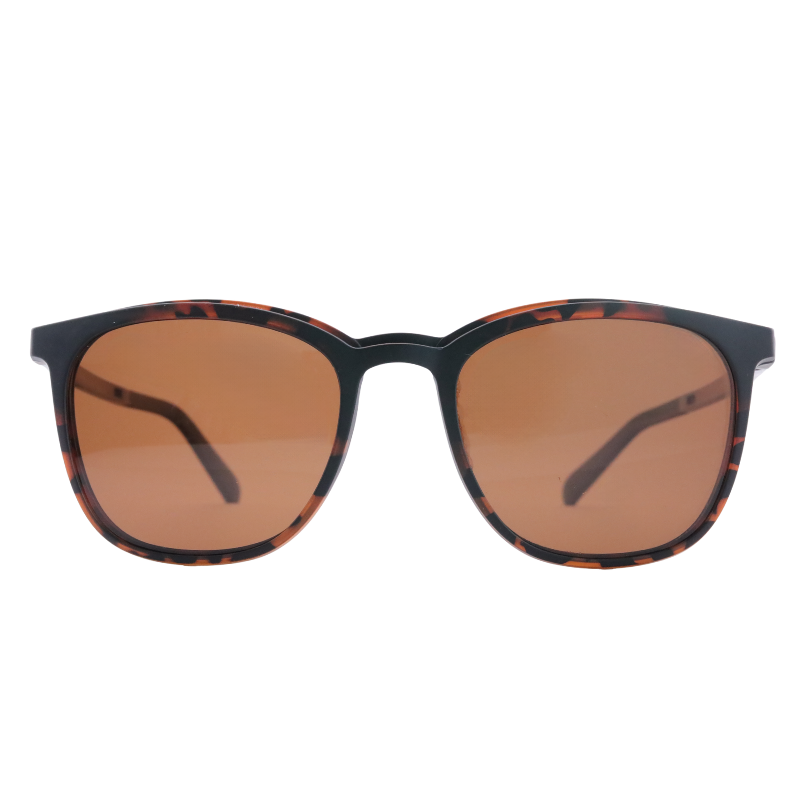
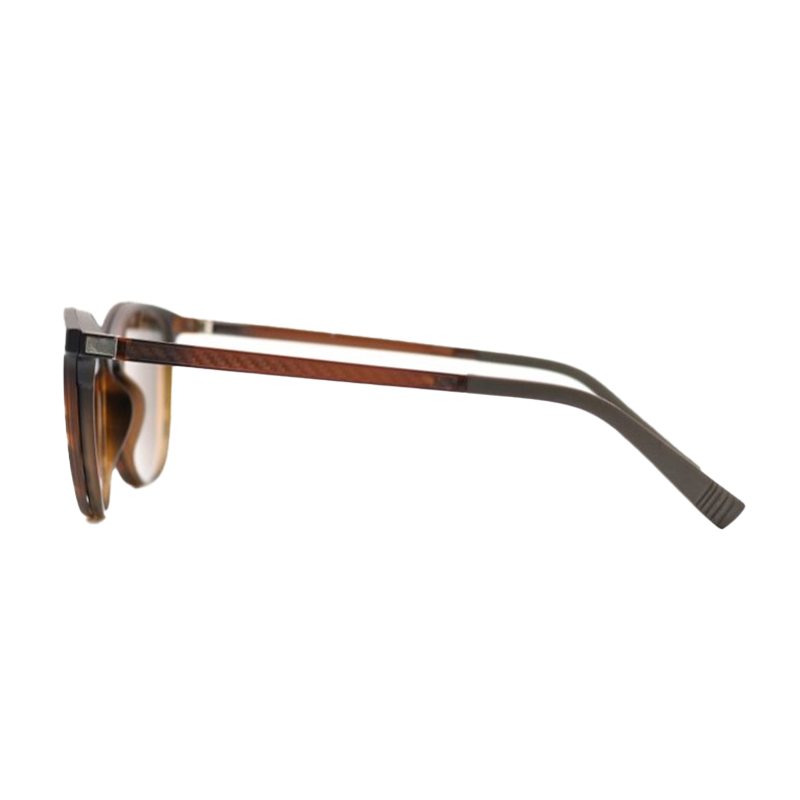
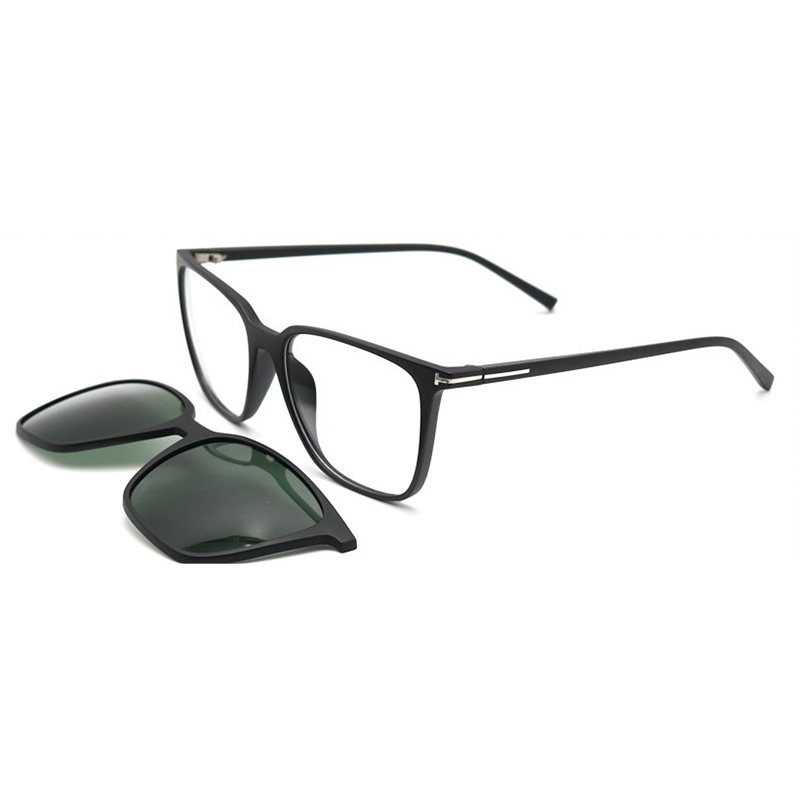
Clip-on sunglasses are tinted lenses in a thin frame that attaches over your everyday glasses, with small hooks or with magnets built into a matching frame. Your prescription stays in the glasses underneath; the clip adds tint, and in most cases polarisation and UV filtering.
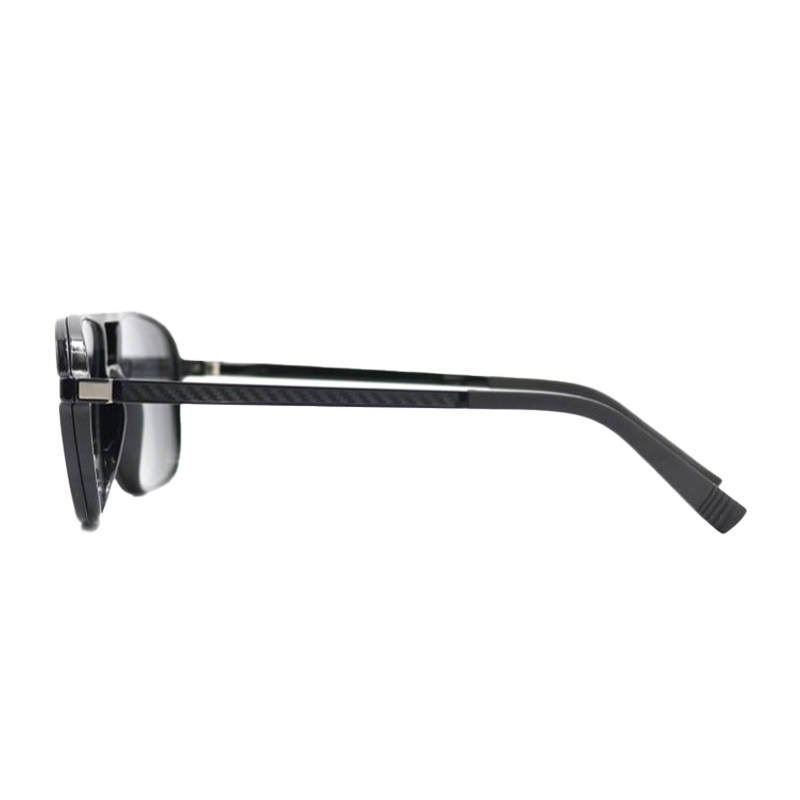
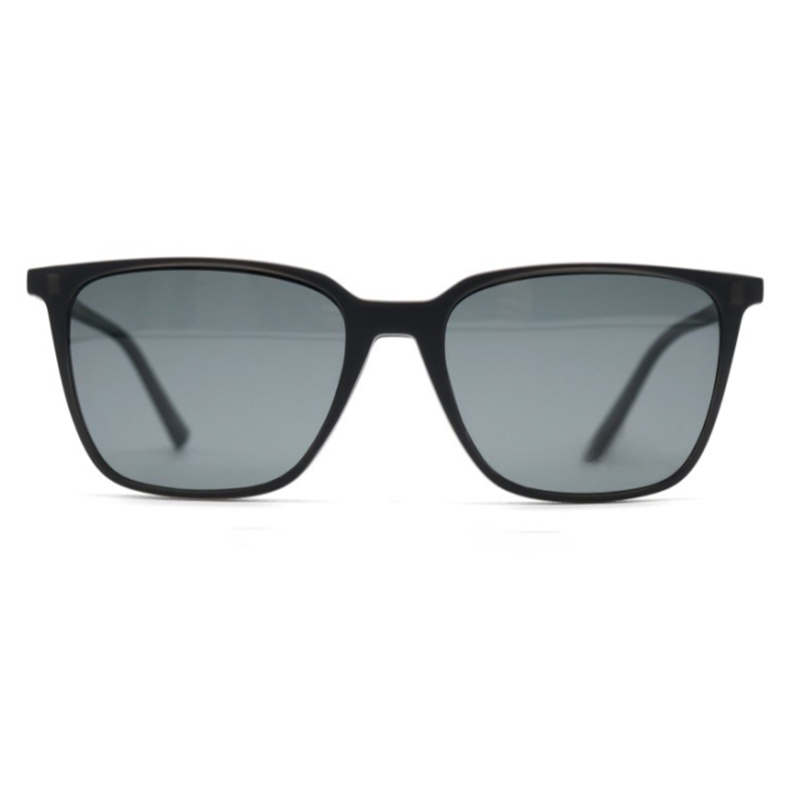
Prescription sunglasses are a separate pair with your prescription ground into tinted lenses. One frame, one lens, no layering. They are made to order, which affects lead time and returns.
Photochromic lenses are prescription lenses containing dyes that darken when exposed to UV light and clear again indoors. The American Academy of Ophthalmology lists their advantages as convenience, continuous UV protection and not having to carry a second pair, and their drawbacks as variable quality between brands, slower response in cold weather and weak darkening inside cars, because auto glass already filters UV.
How do clip-on sunglasses compare with prescription sunglasses?
The table below is the short version. The sections that follow explain the rows that decide most purchases.
| Factor | Clip-on sunglasses | Prescription sunglasses | Photochromic lenses |
|---|---|---|---|
| Typical cost | Lowest. Clip from $46 at OpteLux; frame with matching magnetic clip from $112 | Highest. A second frame plus custom tinted prescription lenses | Mid. An add-on to lenses you are buying anyway |
| Optical quality | Good, but two layers and an air gap; faint reflections possible | Best. One lens, no join, edge to edge | Tint depth varies by brand and temperature |
| Weight on the nose | Adds a second layer to your frame | The sunglass frame alone | No change |
| Driving | Good if the clip is polarised and sits flat | Best. Polarised prescription lenses available | Weak. Vehicle glass blocks the UV that darkens the lens |
| Indoors and out all day | Clip on, clip off, keep track of the clip | Two pairs to carry and swap | Best. One pair, no swapping |
| Polarisation | Usually included on quality clips | Optional, at extra cost | Not usually |
| Prescription range | Any. The prescription is in the glasses underneath | Limited by frame curvature at strong or complex prescriptions | Most prescriptions |
| Returns at OpteLux | Returnable within 30 days, like-new | Custom-made lenses are not returnable | Custom-made lenses are not returnable |
| Best for | Occasional sun, budget, trying before committing | Drivers, commuters, long outdoor hours | Walking, errands, travel days |
Are clip-on sunglasses worth it?
For most glasses wearers buying their first sun solution, yes. The case rests on three things.
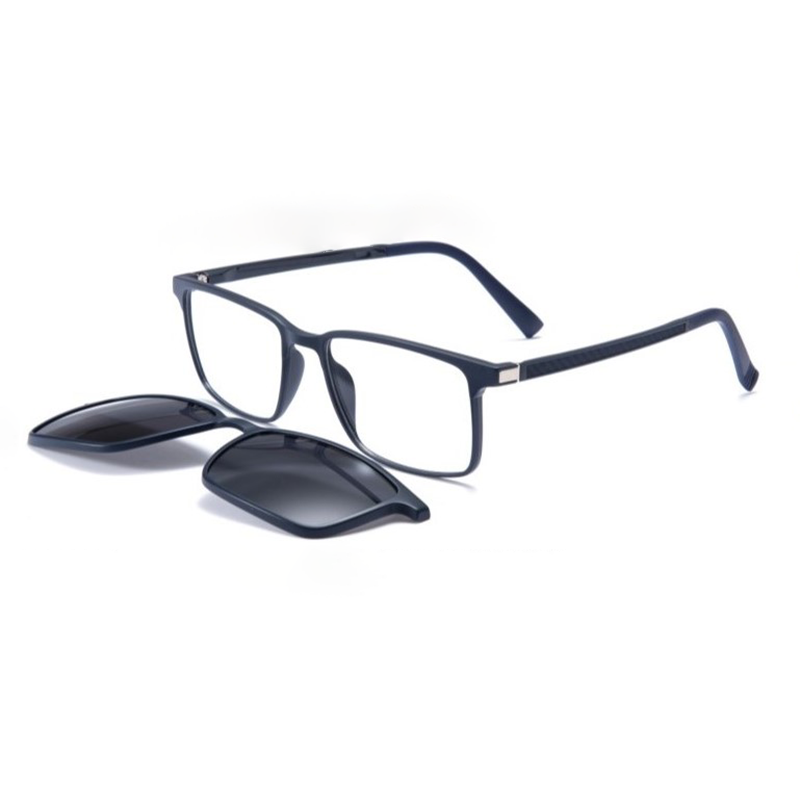
First, cost. A clip is priced like an accessory, not like eyewear. The OGD7033 polarised magnetic clip-on is $46 with UV400 protection; a full frame with a matching detachable sun clip, such as the OJO199 rectangular clip-on set, is $112 before lenses. Prescription sunglasses mean buying a second frame and a second set of custom lenses.
Second, risk. A clip is a standard product, so it falls under the ordinary 30-day return window. Prescription sunglasses are made to your numbers and your tint, and custom-made lenses are excluded from returns. If you are not sure how much you will wear sunglasses, a clip lets you find out for $46.
Third, flexibility. The prescription lives in your everyday frame, so a new prescription does not make the clip obsolete. A magnetic clip designed for its frame snaps into place in a second; a universal hook clip works across most frames of a similar size.
The limitations are optical and practical. Two lenses with a thin air gap between them can produce faint internal reflections, which is one reason to take the clip off after dark. A hook-style clip that does not sit flat can press on the lens or rattle. And clips get lost: they live in pockets and cup holders, not in a case. Magnetic clips sold as a set with a matching frame solve the fit and rattle problems, though not the losing-it problem.
When are prescription sunglasses the better buy?
Prescription sunglasses win when the hours in bright light are long, regular and predictable, which usually means driving.
A single tinted lens, cut to your prescription and fitted edge to edge in its own frame, is optically cleaner than any layered solution. There is no second surface to reflect, no gap to catch dust, nothing to clip or unclip at a junction. If you commute by car or spend weekends outdoors, that convenience adds up quickly.
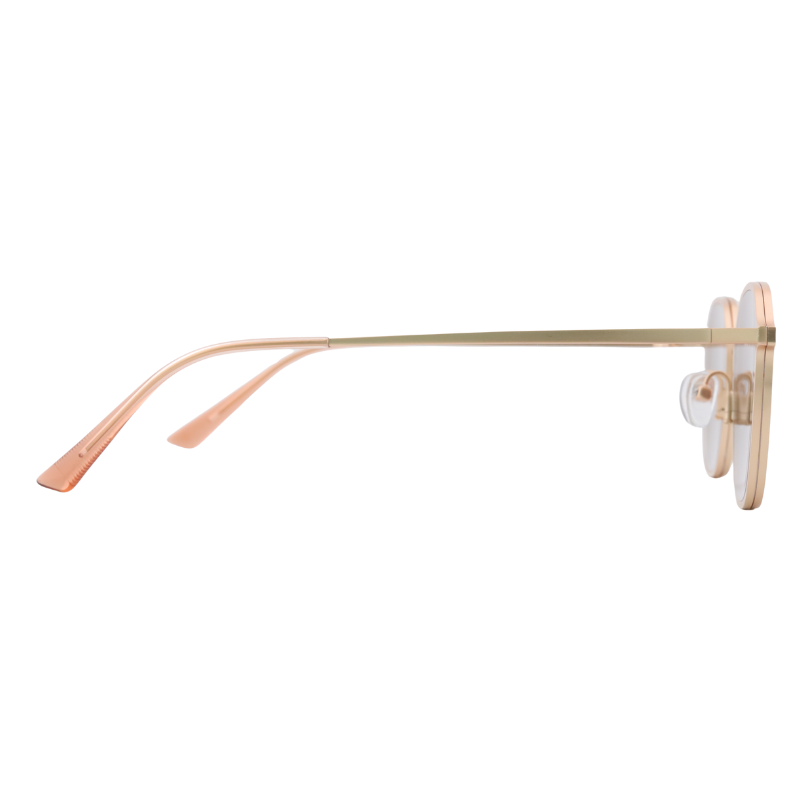
They also settle the weight question. A clip adds a second layer to whatever is already on your nose; a dedicated sunglass frame carries only itself. On a Grade-A titanium or alloy frame that is already light, the difference is small in the hand but noticeable by hour four.
Two constraints apply. Strong or complex prescriptions do not suit highly curved wraparound shapes, so check the lens options on the frame you want. And because they are custom-made, get the prescription right first: our guide to reading an eyeglass prescription covers SPH, CYL, AXIS and PD in plain language, and the VisionCraft Center measures your PD and face dimensions free before you order.
Where do photochromic lenses fit?
Photochromic lenses are the one-pair answer, and for many professional days they are the right one. Walk from the office to lunch and back, and they darken and clear without you touching them. Travel light, and there is no second pair to pack or lose.
The limitation is the car. Vehicle glass filters much of the UV that triggers the darkening, so photochromic lenses stay mostly clear behind a windscreen. The AAO lists this as a specific drawback, alongside slower response in cold weather and quality that varies between brands. If your bright hours are mostly behind the wheel, a polarised clip or prescription sunglasses is the better spend.
They also do not normally include polarisation, which is what cuts reflected glare from wet roads and water. OpteLux offers photochromic lens options on most frames, in grey, brown and several other tints. Grey changes colours least, which is the sensible default for anyone who reads documents or screens outdoors.
Does the option you choose change your UV protection?
It should not, but it can, so check.
The AAO’s sunglasses guidance is direct on this: look for a label stating 100 percent UV protection, do not assume a darker lens is safer, and do not assume a coloured lens blocks more sun. Polarisation itself does not provide UV protection; it is a separate feature that is often, but not always, combined with a UV filter. The American Optometric Association recommends lenses that block 99 to 100 percent of both UVA and UVB.
In practice, that means three checks. A clip should state UV400 or 100% UV, not just “polarised”. Prescription sunglass lenses should carry a UV filter; the AAO notes that a UV coating on clear prescription lenses gives protection equivalent to sunglasses. Photochromic lenses block UV in their clear state as well as their dark state, one of their quieter advantages. The same guidance adds that larger or wraparound frames limit UV entering from the sides, which a small clip on a small frame does not.
What will each option cost you over time?
Exact totals depend on your prescription and lens choices, so the honest comparison is structural. A clip is a one-off accessory that survives prescription changes, because the prescription is not in it. Prescription sunglasses are a second full pair, so every prescription change means new lenses in two frames, which is the option’s largest long-term cost if your prescription is still moving. Photochromic lenses are an add-on to lenses you are buying anyway.
OpteLux publishes frame prices on every product page: clip-ons from $46 in the clip-on sunglasses collection, and sunglass frames from $46 in the sunglasses collection, with prescription, photochromic and polarised lens options priced at checkout. For what the frame itself is made of, see our comparison of titanium, acetate and stainless steel frames.
How to choose in six steps
- Count your bright hours by activity. Driving points to prescription sunglasses or a polarised clip. Walking and errands point to photochromic. Occasional sun points to a clip.
- Check your prescription is current. Anything custom-made is built to your numbers and cannot be returned, so an out-of-date prescription is an expensive mistake. A clip does not need one.
- Decide whether you need polarisation. If glare from roads, water or glass is the problem, you want it. A polarised clip is the cheapest way to get it; polarised prescription lenses are the cleanest.
- Confirm the UV rating. UV400 or 100% UV, stated on the product, whichever option you pick.
- Match the format to the frame. A magnetic clip needs its matching frame. A hook clip needs a frame of similar size and shape. Prescription sunglasses need a frame whose curvature suits your prescription strength.
- Measure before you order. Frame width, bridge and temple length in millimetres, and your PD. If you do not have them, use the VisionCraft Center’s free face and PD measurement, or follow our guide to measuring your PD at home.
What about returns and exchanges?
This is the row most guides skip, and it changes the decision. OpteLux’s return policy allows returns and exchanges within 30 days of delivery, in like-new condition with the original case, cloth and packaging. Custom-made lenses, including prescription and tinted lenses, are excluded. Exchanges can be requested within 14 days of delivery.
So a clip-on, or a frame bought without custom lenses, can come back if it does not suit you. Prescription sunglasses and photochromic prescription lenses cannot, because they were made for you. That is normal in eyewear, but it is a reason to buy the custom option second, once you know how you actually use sunglasses. Whichever you choose, a frame that lives in a bag or a car benefits from a case and the occasional clean; our guide to cleaning and caring for your glasses covers what damages lens coatings and what does not.
When should you see an eye-care professional?
Sunglasses, clips and photochromic lenses reduce glare and filter UV. They do not treat any eye condition. If you notice new sensitivity to light, blurred vision, halos, or discomfort that a tint does not resolve, book an eye examination rather than a new lens. A current prescription, including your PD, is also the starting point for any custom-made option, and only an eye-care professional can provide one.
Frequently asked questions
Can I get polarised prescription sunglasses?
Yes. Polarised lenses can be made to most prescriptions. They are usually an add-on at checkout rather than the default, so select them deliberately if glare from roads or water is the problem you are solving.
Do clip-on sunglasses work with any glasses?
Hook-style universal clips work with most frames of a similar size and shape, though they sit awkwardly on very small, very large or strongly curved frames. Magnetic clips are made for one frame and fit only that frame, which is why they sit flat and do not rattle.
Do photochromic lenses work in the car?
Poorly. Vehicle glass blocks much of the UV that darkens them, so they stay mostly clear behind a windscreen; the American Academy of Ophthalmology lists this as a known drawback. For driving, choose a polarised clip or prescription sunglasses.
Are clip-ons bad for your lenses?
A clip that sits flat and is handled carefully does no harm. A hook clip that is forced on or scraped across the lens can mark a coating over time. Magnetic clips avoid contact with the lens entirely.
Which option is best for a strong prescription?
Usually a clip or photochromic lenses in your everyday frame, because the prescription stays in a frame already chosen to suit it. If you want prescription sunglasses, check the lens options on the specific frame first.
Can I return prescription sunglasses if I do not like them?
Not at OpteLux, and rarely elsewhere. Custom-made lenses, including prescription and tinted lenses, are excluded from returns. Frames without custom lenses, and clip-ons, are returnable within 30 days in like-new condition.
Buy the format that matches your day, not the one that sounds best
A clip is cheap, returnable and good enough for most occasional sun. Prescription sunglasses are the cleanest optics you can put in front of your eyes and the right call for anyone who drives. Photochromic lenses are the one-pair answer for people on foot. Count where your bright hours go, check the UV rating, and buy the first one on that basis. Most all-day glasses wearers end up with two of the three eventually; the point is to buy the right one first.
Related reading
- Top aviator sunglasses for men: fit, lens size and lens colour
- Titanium vs acetate vs stainless steel frames: which should you buy?
- How to read your eyeglass prescription
- How to measure your PD at home
- How to buy glasses online: the complete guide for men
- Polarised vs Non-Polarised Sunglasses: Which Should You Buy?
General guidance, not a replacement for an eye examination by a qualified specialist. About the author.