Best Aviator Sunglasses for Men: A Buyer's Guide
By Dr. Qaria, , updated
Introduction
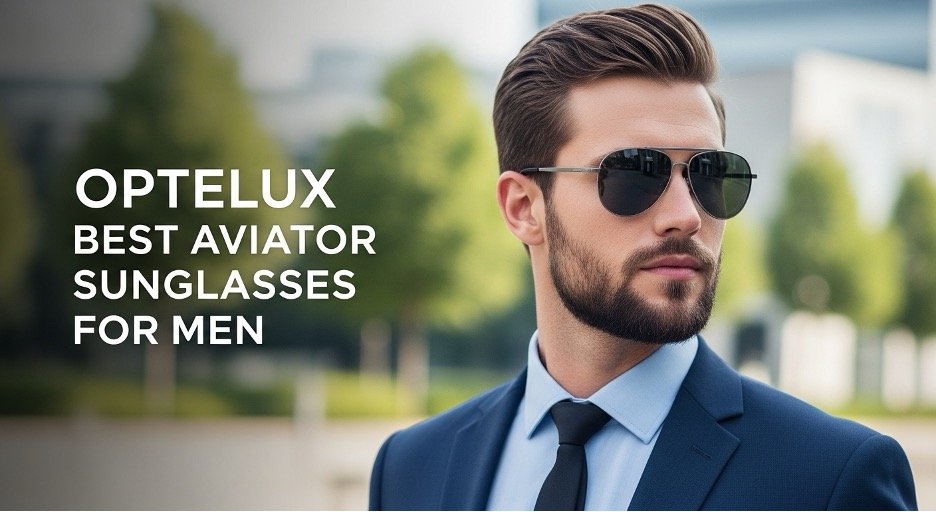
Aviator sunglasses are one of those rare designs that have never needed replacing. First built in the 1930s for military pilots who needed maximum eye coverage and reliable glare protection at altitude, the teardrop-shaped frame with its double bridge and wide lens area has been in continuous production for nearly ninety years. Every decade has added its own version, and the fundamental design has stayed the same throughout all of them. That is not nostalgia. That is engineering that worked the first time.
What has changed is the material, the lens technology, and the quality gap between a frame built to last and one built to look good in a photograph. This guide covers what actually matters when choosing the best aviator sunglasses for men in 2026: what to look for in the lens, how the frame material affects daily comfort and lifespan, which face shapes suit the classic teardrop and which suit a squarer pilot silhouette, and which frames from the OpteLux range are worth your consideration.
Why Aviator Sunglasses Have Outlasted Every Other Frame Style
Most eyewear trends run on a five to ten year cycle before they start to look dated. Aviators have been in every major designer’s collection every year since the 1960s without a break. The reason is functional rather than fashionable. The teardrop lens shape provides more vertical coverage than almost any other frame profile, which means genuine protection from light entering at the top, bottom, and sides of the visual field. Most sunglasses block direct forward light. Aviators block the angles too.
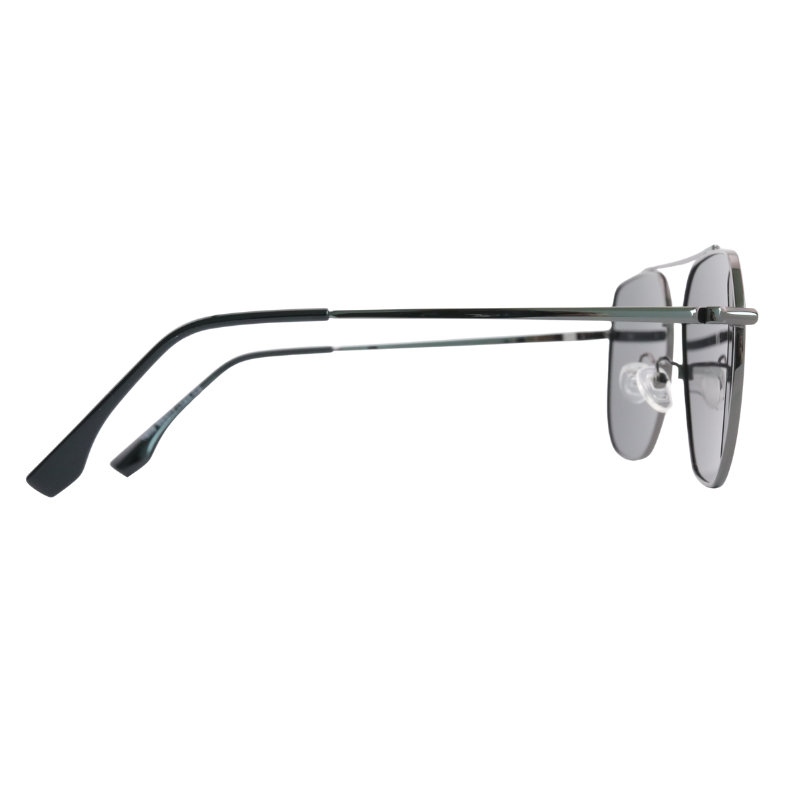
The double bridge, which is the second bar running across the nose below the main frame, was originally an engineering feature that prevented the metal frame from flexing under the pressure changes of high altitude flight. On a modern premium frame it serves the same purpose: it stabilizes the front of the glasses under physical stress and gives the characteristic silhouette that makes an aviator identifiable from across a room.
For men who spend time outdoors in varying light conditions, driving, travelling, or moving between environments as part of their working day, the aviator’s functional coverage advantage is genuinely relevant. It is not a style argument. It is a performance argument that also happens to produce one of the most versatile and enduring looks in men’s eyewear.
What to Look for in Men’s Aviator Sunglasses: The Four Decisions That Matter
1. Lens Type: Polarised vs Standard and What UV400 Actually Means
This is the most important functional decision and the one most men spend the least time on. The visual appearance of a lens tells you almost nothing about how well it performs. A dark tint reduces brightness. It does not eliminate glare, filter UV radiation, or improve visual contrast unless the lens is built specifically to do those things.
Polarised lenses contain a chemical filter aligned horizontally across the lens that blocks the specific wavelength of reflected light responsible for surface glare. Glare from roads, water, car bonnets, and glass buildings is almost entirely horizontal light. A polarised lens eliminates it selectively, which means colours remain accurate and depth perception stays intact while the fatiguing effect of reflective surfaces is removed. For driving, commuting, travelling, and any outdoor environment where reflective surfaces are common, polarised lenses perform substantially better than tinted lenses of equivalent darkness.
UV400 protection means the lens blocks all ultraviolet radiation with wavelengths up to 400 nanometres, covering both UVA and UVB bands completely. This is the correct standard for full UV protection. Lenses marketed with percentage figures below 100 percent UV protection are leaving a portion of the harmful spectrum through, which accumulates over years of regular outdoor wear. Every lens in the OpteLux men’s sunglasses range carries UV400 protection as a baseline, not as a premium upgrade.
| Lens Type | What It Does | Best For |
|---|---|---|
| Standard tinted | Reduces brightness only, no glare elimination | Occasional light outdoor use in consistent conditions |
| Polarised | Eliminates horizontal glare from reflective surfaces while maintaining colour accuracy | Driving, commuting, travel, outdoor meetings, coastal or water environments |
| Polarised UV400 | Full glare elimination plus complete UVA and UVB protection | All outdoor professional and daily wear, the correct standard for regular use |
| Mirrored polarised | Polarised lens with a reflective surface coating that reduces additional light in very bright conditions | High-glare environments: skiing, open water, very bright summer driving |
2. Frame Material: Why Titanium Changes the Daily Wear Experience
Aviator frames are almost always made from metal, which is correct given the design’s origins. Where they differ significantly is in which metal. Standard alloy frames are heavier, more prone to losing their shape over time, and frequently contain nickel at the nose pad contact points, which causes skin reactions in a meaningful portion of people after prolonged daily use.
Titanium frames weigh roughly 40 percent less than standard metal alloys at equivalent structural strength. For a frame worn through a full day outdoors, that weight difference registers clearly by late afternoon. A titanium aviator frame that fits correctly at the bridge and temples creates no pressure points under hours of continuous wear. Standard alloy frames with the same dimensions accumulate pressure gradually in ways most wearers only notice when they take the glasses off.
Titanium also holds its shape. An aviator frame adjusted to the correct fit on the first day of wear should still be sitting in exactly the same position after two years of regular outdoor use. The physical stress of daily handling, temperature changes from indoor to outdoor wear, and the pressure of folding and unfolding causes standard alloy frames to lose their alignment gradually. Titanium resists all of this without adjustment.
3. Classic Teardrop vs Square Pilot: Choosing the Right Aviator Shape
Within the aviator category there are two distinct silhouettes, and the distinction matters for both face shape compatibility and the overall impression the frame creates.
The classic teardrop shape has a wider, rounder lower portion that narrows toward the top of the lens. This is the original pilot design and the most widely recognised aviator profile. It suits oval and oblong face shapes particularly well because the wider lower lens balances a longer face without adding width at the temples. It also works on square faces because the curved lower edge softens the angular jaw line rather than echoing it.
The square pilot shape has straighter edges and a more angular lens profile that gives the same coverage area as the teardrop but reads as sharper and more structured. It suits round and oval face shapes well because the angular lines add definition to softer facial contours. For professional contexts where the sunglasses are worn in client-facing or business outdoor situations, the square pilot silhouette often reads as more considered and deliberate than the classic teardrop.
4. Face Shape: Which Aviator Profile Works Best for Your Bone Structure
- Oval face. The most versatile face shape for aviator sunglasses. Both the classic teardrop and the square pilot silhouette suit oval faces well because the balanced proportions of the face work with most frame profiles without creating imbalance at any point. The priority is frame width: the outer edge of the lens should align close to the widest point of the face without extending noticeably beyond it.
- Square face. Strong jaw line and broad forehead. The classic teardrop aviator softens the angularity of a square face more effectively than a square pilot frame, which can echo and amplify the existing angles. A frame with some curve at the lower edge creates contrast that reads as proportionally correct rather than competing with the face shape.
- Round face. Wider at the cheek than at the jaw and forehead with soft contours. The square pilot aviator adds definition and angular contrast that creates the impression of greater length and structure. Classic teardrop frames on a round face can merge with the soft contours of the face and reduce rather than improve the overall balance.
- Oblong or long face. Longer than it is wide with a narrow jaw and forehead. Wider aviator frames with a larger lens area balance a long face by adding visual width. Avoid very narrow or small aviator frames on an oblong face as they elongate rather than balance the proportions.
If you are unsure which face shape applies to you, the OpteLux [AI SmartMatch Tool](https://optelux.com/suggestion/) identifies your face shape from a photograph and returns specific frame recommendations matched to your proportions. It takes under two minutes and removes the uncertainty from the selection process before you order.
The OpteLux Aviator and Pilot Sunglasses Range for Men
The OpteLux men’s aviator and pilot sunglasses have alloy frames, and polarised lenses are available across much of the range. These are not entry-level fashion sunglasses carrying a premium label. They are built and tested specifically for professional and daily outdoor wear, which means they are designed around the demands of hours of continuous use rather than occasional wearing.
Classic Polarised Aviators
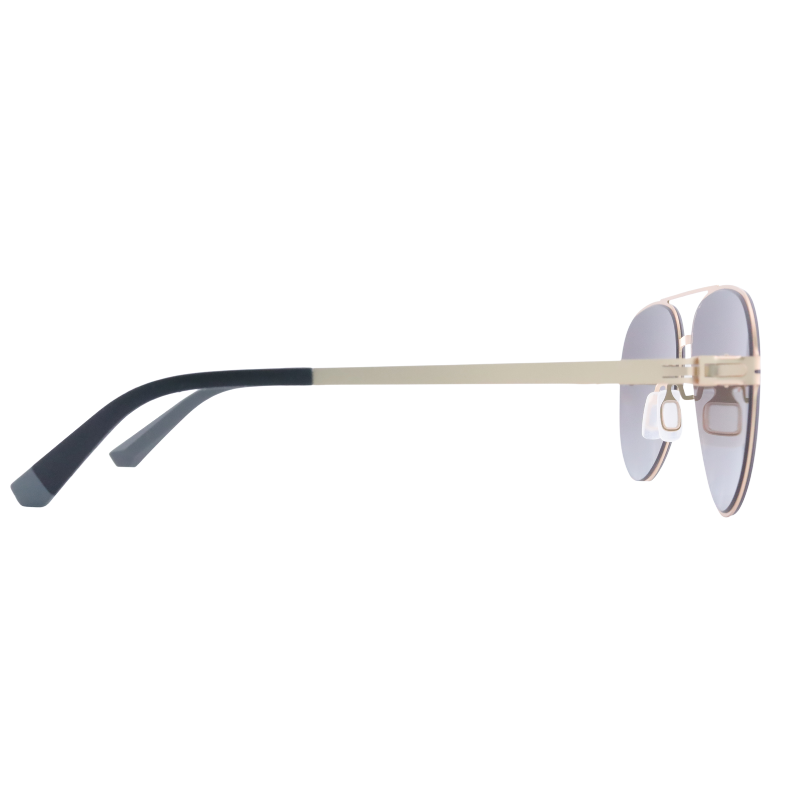
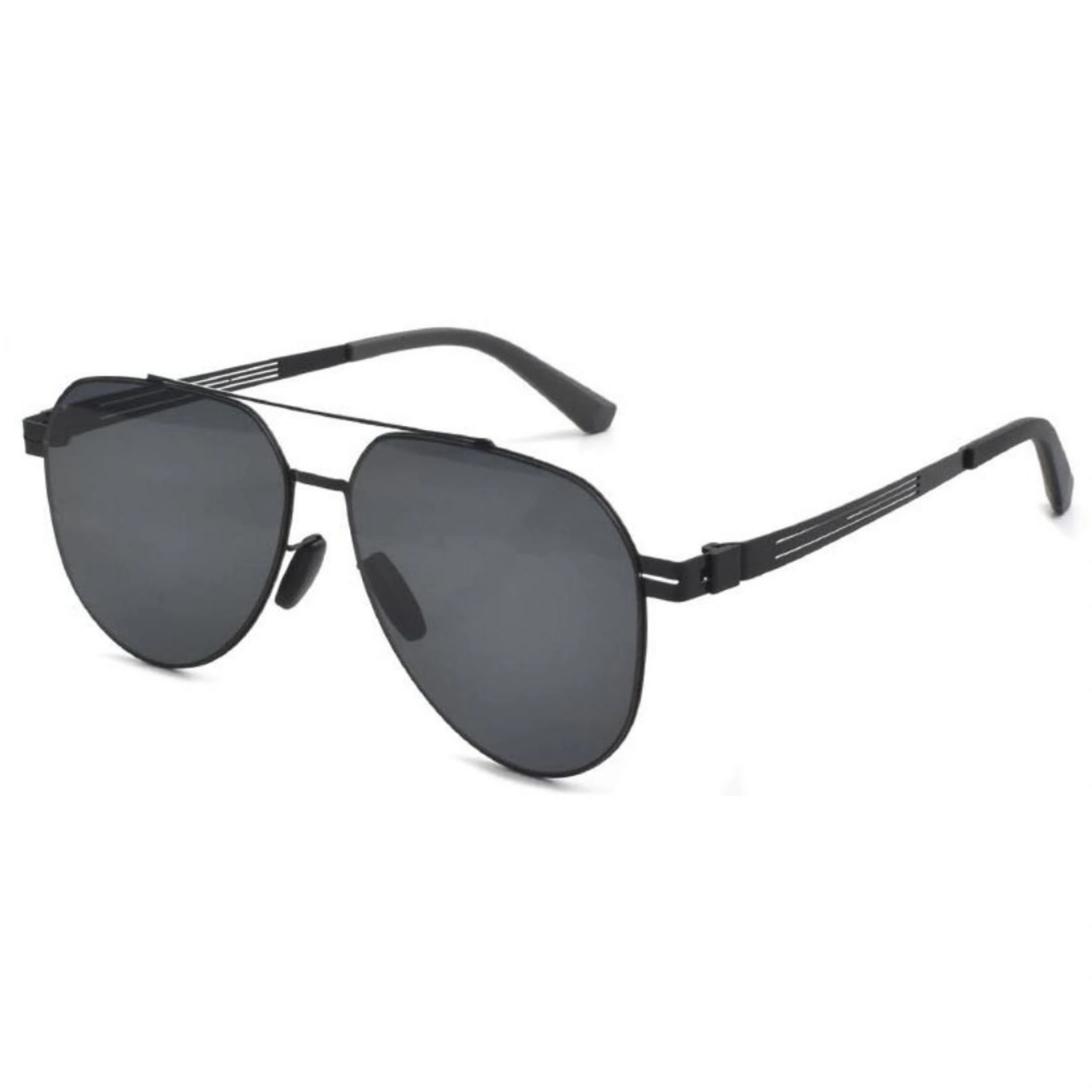
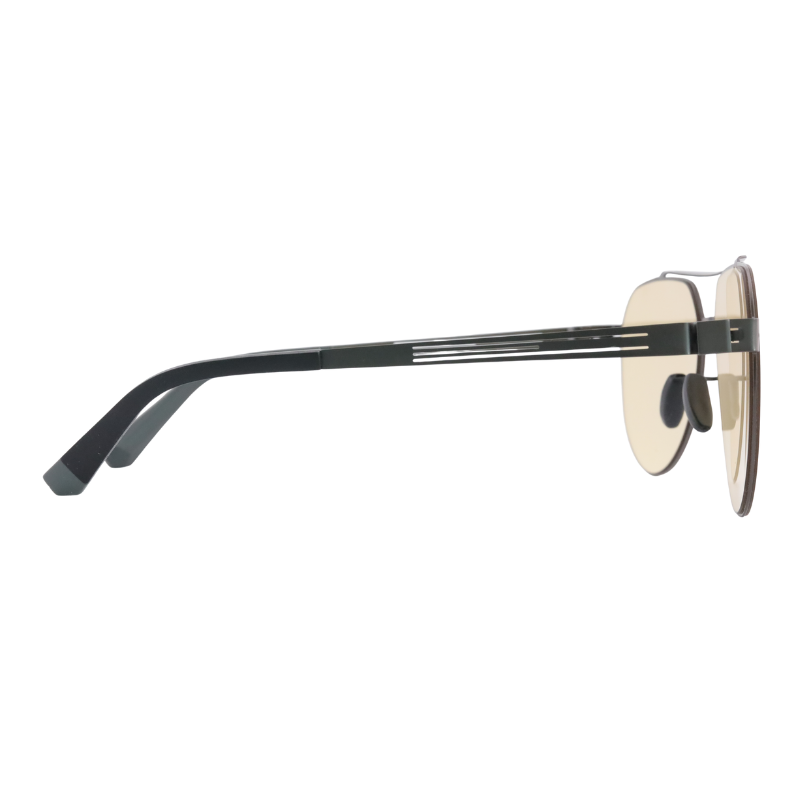
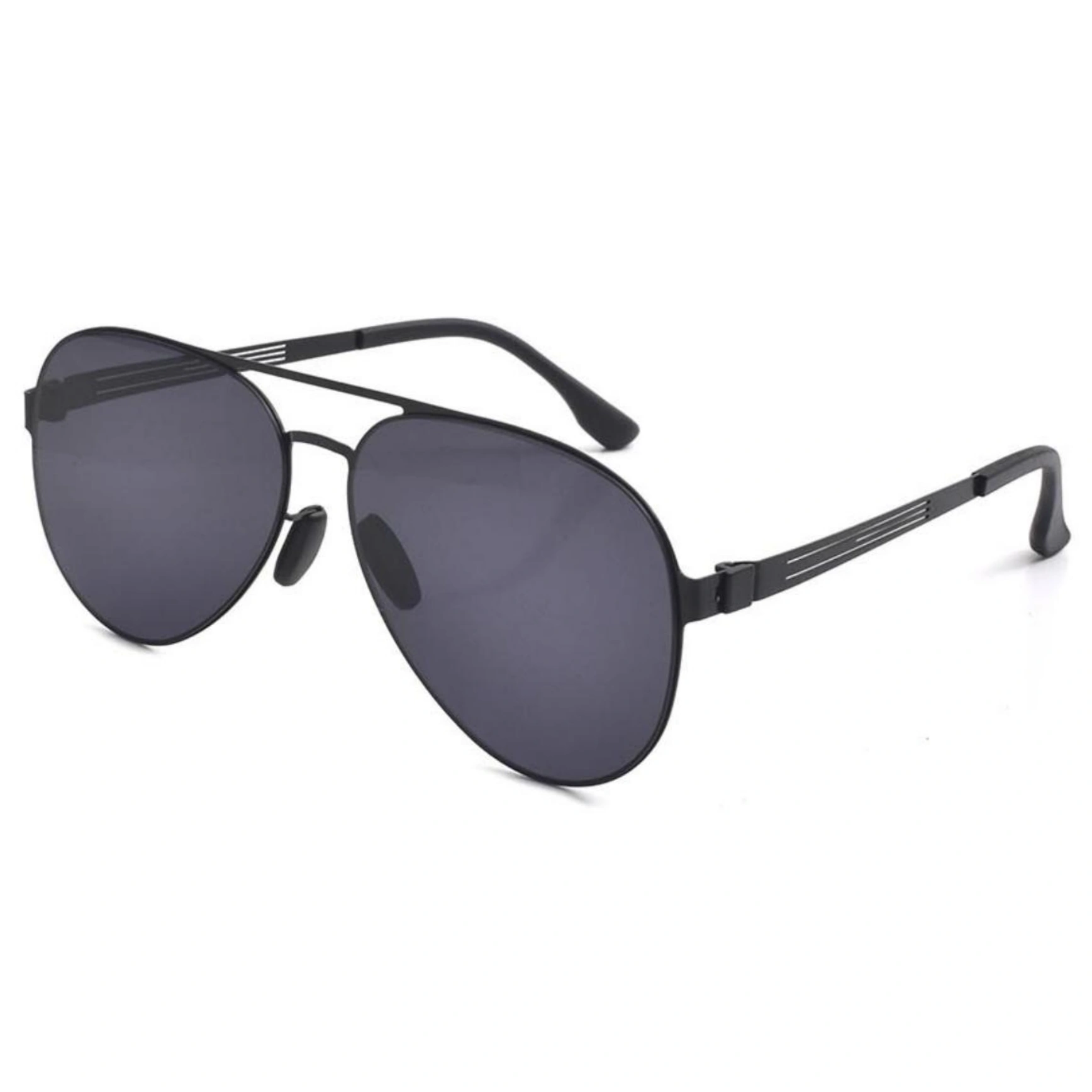
The OYH1809 and OYH1810 are the core classic aviator frames in the OpteLux men’s range. Both carry the traditional teardrop silhouette with the double bridge that defines the aviator look, an alloy frame, and polarised UV400 lenses built for daily outdoor and professional wear. The difference between the two is finish and lens tint, which allows a choice between a gunmetal tone for more formal or business outdoor wear and a lighter finish for travel and casual outdoor use.
The OYH1810 is the frame to consider if outdoor driving or commuting is a consistent part of your day. The polarised lens is calibrated specifically for the kind of horizontal glare produced by road surfaces and oncoming traffic in the low sun conditions that are common throughout the year in the UK. Wearing it on a clear winter morning on a motorway is noticeably different from wearing standard tinted lenses in the same conditions.
OpteLux Classic Polarised Aviator Sunglasses
Alloy frames with polarised UV400 lenses, teardrop silhouette, built for professional and daily outdoor wear.
Square Pilot Sunglasses: The Professional Outdoor Frame
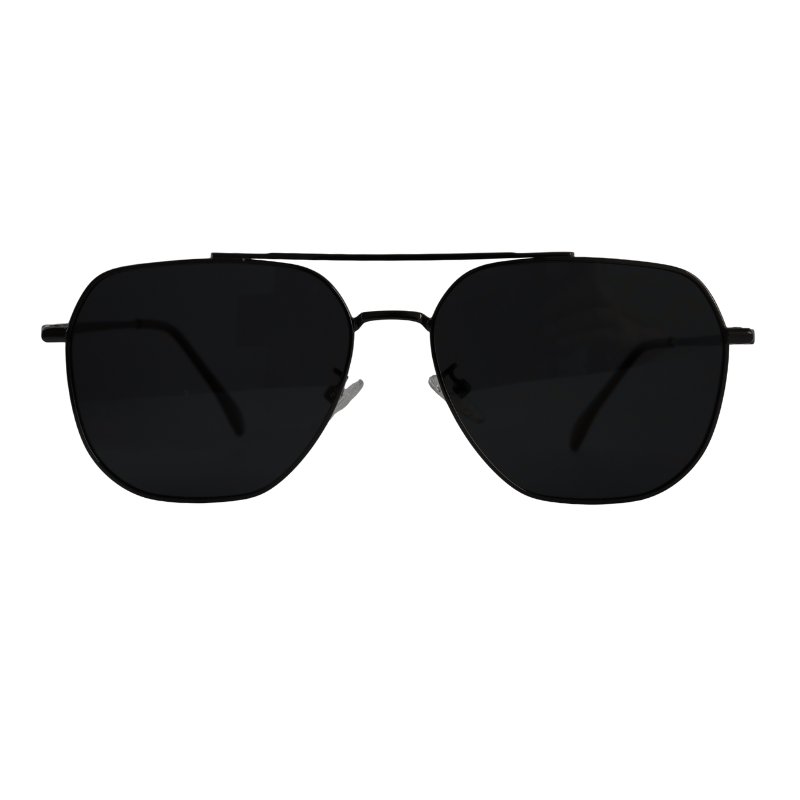
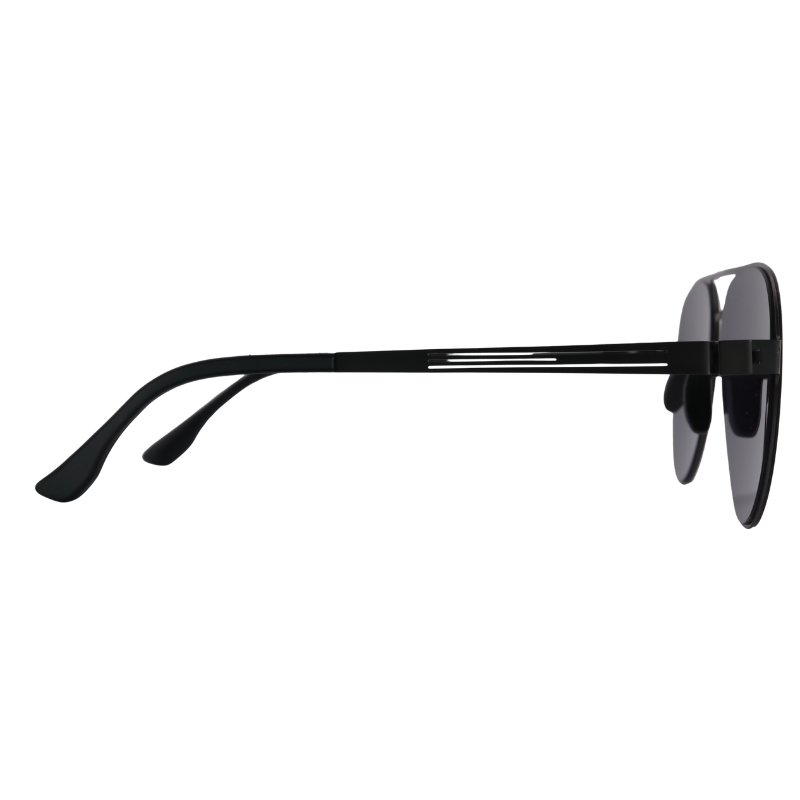
The OYH1812 is the square pilot silhouette in the OpteLux range. Where the classic teardrop reads as relaxed and heritage-led, the square pilot frame reads as sharper and more deliberately contemporary. It suits round and oval face shapes particularly well, and in a professional outdoor context, boardroom terrace, client lunch, summer travel, or outdoor event, it creates a more structured impression than the classic teardrop design.
The slim alloy frame balances the larger lens area of the square pilot profile. Most men who move between indoor air-conditioned environments and outdoor summer heat notice standard metal frames sitting differently after the temperature transition as the metal responds to the change. A correct fit at the bridge and temples is what keeps the OYH1812 in place from morning to the end of a summer afternoon outdoors.
OpteLux Square Pilot Sunglasses
Angular pilot silhouette in alloy with polarised UV400 lenses, built for professional outdoor and business wear.
Extended OpteLux Men’s Sunglasses Range
For men who want to explore the full range of aviator and pilot silhouettes across the OpteLux collection, the OYH1811, OYH6821, and OYH1819 offer further variations in lens tint, frame finish, and bridge design. Each has an alloy frame; lens details are on each product page.
OpteLux Extended Men’s Sunglasses Collection
Alloy sunglasses across a range of aviator and pilot silhouettes.
- OpteLux OYH1811 Square Polarised Sunglasses
- OpteLux OYH6821 Polarised Sunglasses
- OpteLux OYH1819 Square Sunglasses
Matching the Right Aviator Frame to the Right Situation
Driving and commuting
Polarised lenses are the correct choice for any regular driving. The specific type of glare produced by road surfaces, other vehicles, and wet tarmac is almost entirely eliminated by a quality polarised lens, which makes longer journeys more comfortable and improves the ability to judge distance and surface conditions accurately. The classic teardrop aviator provides the coverage area needed to block light entering from above the dashboard on low sun days, which is where most driving glare enters the visual field.
Outdoor professional and business wear
The square pilot silhouette in gunmetal or dark frame performs well in business outdoor contexts because it reads as structured and considered rather than casual. Summer client events, outdoor lunches, travel, and any professional situation that moves outside benefits from a frame that holds its position and its appearance under the physical demands of heat and movement. Titanium specifically handles temperature variation without changing fit, which is the most common complaint about standard metal frames in summer outdoor conditions.
Travel and mixed environments
For men who travel frequently, the classic teardrop aviator in a neutral lens tint handles the widest range of light conditions, from the flat grey light of an overcast UK morning to the high intensity sunlight of a Mediterranean client trip, without requiring a lens change. The UV400 protection is consistent regardless of apparent tint darkness, which means the lens is doing its protective work in all conditions.
Everyday outdoor wear
The frame that suits daily use most effectively is the one that becomes habitual. A titanium aviator that sits correctly, causes no pressure after hours of wear, and holds its shape and finish across years of use stops being something you think about and becomes part of how you move through the day. That transition from conscious accessory to unconscious equipment is the point at which a quality frame justifies its cost entirely.
Mistakes Men Make When Buying Aviator Sunglasses
- Choosing lens darkness over lens quality. A very dark tint looks protective but does nothing about glare or UV radiation on its own. The lens technology matters more than the colour depth. A lighter polarised UV400 lens outperforms a dark standard tint in every relevant measure.
- Buying too wide for the face. Aviator frames read best when the outer edge of the lens aligns close to the natural width of the face at the temples. A frame that extends significantly beyond this point creates visual imbalance that works against the proportions of most face shapes. Use the OpteLux [Face and PD Measurement Tool](https://optelux.com/face-pd-measurements/) to get your face width before selecting a frame.
- Choosing the teardrop shape on a round face. The teardrop’s rounded lower lens echoes the soft contours of a round face rather than contrasting with them. A square pilot profile adds the angular definition that creates better balance for round face proportions.
- Dismissing the frame material as a secondary consideration. Titanium and standard alloy frames may look similar in a product photograph. They do not feel similar after four hours in outdoor summer heat. Material is a daily wear decision, not an aesthetic one.
- Not using the face measurement tool before ordering online. Frame width and bridge width are the two measurements that determine whether an aviator fits correctly. Getting both right before ordering removes the most common cause of online sunglasses purchase disappointment.
The Right Aviator Frame Is the One You Stop Noticing
Aviator sunglasses have lasted ninety years because the design solves a real problem well. Wide teardrop lenses that cover the full visual field. A double bridge that stabilises the frame under physical stress. A metal construction light enough to wear all day without registering as a weight on the face. The design has not changed because it does not need to.
What has improved is the material. A titanium aviator frame built to the same geometry as the original design delivers the intended performance without the weight penalty of early alloy frames, without the skin reaction risk of nickel-containing metals, and without the gradual misalignment that comes from standard metal losing its shape over years of daily handling.
For men who wear sunglasses as part of their daily professional and outdoor life rather than as an occasional accessory, the material decision is the one that determines whether a frame serves them for a year or for five.
Browse the full men’s sunglasses collection at optelux.com. Use the AI SmartMatch Tool for a personalised frame recommendation based on your face shape and wearing context, or the Face and PD Measurement Tool to confirm your measurements before ordering.
Related reading
Questions and answers
Should aviator sunglasses be polarised?
For driving, travel and time near water, yes. Polarised lenses cut horizontal glare from reflective surfaces; a plain tint only dims the light.
What does UV400 mean on sunglasses?
The lens blocks ultraviolet light up to 400 nanometres, which covers both UVA and UVB. It is separate from tint darkness and polarisation.
Do aviators suit a round face?
The square pilot shape usually does, because its straighter lines add definition. A classic teardrop can blend into soft contours.
Why do aviators have a double bridge?
It was designed to keep the metal front from flexing, and it still steadies the front of the frame today.
General guidance, not a replacement for an eye examination by a qualified specialist. About the author.